




Industry Insights | Guest Contribution
What does it really take to build a profitable sportsbook in Africa?
With growing competition, rising customer acquisition costs, changing regulatory requirements and increasing expectations around payment reliability, sportsbook operators face a challenge that goes beyond attracting players.
In this guest contribution, Kolade Olalekan Yusuf, an iGaming professional with over a decade of industry experience, explores 11 practical strategies for building sustainable betting businesses in Nigeria and across Africa.
From customer acquisition and retention to platform performance, financial management, regulatory compliance and a practical 90-day improvement plan, the article offers insights for sportsbook founders, operators, investors and industry professionals.
Here is his perspective.
By Kolade Olalekan Yusuf | iGaming & Sportsbook Operations | Commercial Growth | Market Expansion
The African iGaming industry continues to attract operators, investors, technology providers, and entrepreneurs looking to participate in one of the continent’s most dynamic digital consumer markets. However, while customer acquisition and betting activity can generate impressive headlines, sustainable profitability remains a more complex challenge.
In my view, the real measure of a successful sportsbook is not simply how many customers it registers, how much money it spends on marketing, or how much betting turnover it generates. The real test is whether it can consistently acquire valuable customers, retain them responsibly, manage operating costs, deliver a reliable product, and convert business activity into sustainable financial performance.
Having spent over a decade in the iGaming industry across operations, commercial management, platform launches, marketing, affiliate management, and business development, I believe there are several strategic areas that deserve greater attention from sportsbook operators across Nigeria and Africa.
1. Stop Measuring Growth by Registrations Alone
One of the common mistakes in sportsbook management is treating new registrations as the primary indicator of business success. Registrations are important, but they represent only the beginning of the customer journey.
A business may register thousands of users through an expensive advertising campaign without generating a corresponding increase in depositing customers, repeat activity, or net revenue. Operators should evaluate the entire conversion funnel:
- New registrations
- Verified accounts
- First-time depositors
- First-time bettors
- Repeat depositors
- Active customers
- Retained customers
- Customer lifetime value
The key question is not simply how many customers joined, but how many became active, how many returned, and how much sustainable value they generated.
For example, a marketing campaign that produces 10,000 registrations but very few depositing customers may be less valuable than a smaller campaign that attracts 2,000 users with stronger conversion and retention.
My recommendation: Every acquisition campaign should have clearly defined commercial objectives, measurable conversion targets, and a post-campaign profitability review. Growth becomes meaningful when acquisition translates into sustained customer value.
2. Understand The Economics behind Sportsbook Profitability
Sportsbook profitability requires more than increasing betting turnover. Operators need a clear understanding of the relationship between turnover, Gross Gaming Revenue (GGR), Net Gaming Revenue (NGR), bonuses, taxes and levies, payment costs, marketing expenditure, technology fees, and operating expenses.
For a simplified sportsbook model:
GGR = Stakes accepted − Winnings paid
NGR is generally calculated after specified gaming-related deductions, such as bonuses and promotional costs, although the exact definition varies between operators and reporting frameworks.
From there, management must account for other expenses to understand the business’s contribution and operating profitability.
Consider a hypothetical monthly example:
| Performance Metric | Amount |
| Total stakes accepted | ₦100 million |
| Winnings paid to customers | ₦92 million |
| GGR | ₦8 million |
| Bonuses and promotional costs | ₦1.5 million |
| Illustrative NGR after promotions | ₦6.5 million |
The business has generated ₦100 million in turnover, but its GGR is ₦8 million and its illustrative NGR after promotions is ₦6.5 million. That ₦6.5 million is not automatically profit. Payment processing, gaming taxes and levies, platform fees, payroll, marketing costs, and other operating expenses still need to be considered.
This is why leadership teams must avoid celebrating turnover without understanding the underlying economics. The objective should be profitable growth, not volume at any cost.
3. Make Customer Acquisition More Efficient
Customer acquisition is essential in a competitive market, but an operator’s acquisition strategy must reflect its commercial objectives and the economics of its target audience.
In Nigeria, sportsbooks compete through digital advertising, affiliates, influencers, sponsorships, retail distribution, partnerships, and brand visibility. Each channel has different costs, conversion patterns, and customer quality.
A disciplined acquisition strategy should evaluate:
- Cost per registration.
- Cost per first-time depositor.
- Registration-to-deposit conversion.
- Deposit-to-first-bet conversion.
- Repeat deposit and retention rates.
- Contribution margin by acquisition channel.
- Payback period and customer lifetime value.
Affiliate marketing deserves particular attention. An affiliate generating substantial registration numbers is not necessarily the most commercially valuable partner. Operators should assess affiliate performance based on verified, eligible customers, depositing activity, retention, revenue contribution, and compliance with marketing requirements.
Similarly, marketing budgets should be allocated according to evidence. Channels that consistently produce valuable customers should receive appropriate investment, while underperforming campaigns should be reviewed, optimized, or discontinued. The objective is not merely to spend less. It is to achieve better commercial outcomes from every naira invested.
4. Treat Retention as a Growth Strategy
Acquiring a customer is only the first part of building a sustainable sportsbook. If customers register, deposit once, and never return, the operator must continually spend money replacing lost customers. Retention can reduce that pressure and improve the return on acquisition expenditure. Effective retention begins with understanding customer behaviour. Operators should identify where customers disengage, what prevents repeat deposits, how product friction affects activity, and which communication strategies encourage appropriate continued engagement.
A structured CRM programme can include:
- Welcome and onboarding journeys.
- Clear product education and support.
- Relevant match and market notifications.
- Segmentation based on legitimate behavioral patterns.
- Timely communication with inactive customers.
- Personalized service based on customer preferences.
- Customer feedback and complaint resolution.
However, retention should not depend on escalating bonuses or pressuring customers to continue betting. Responsible gaming safeguards must be built into customer lifecycle management. Communications and promotions should respect applicable laws, customer preferences, self-exclusion, and other player-protection controls. The most sustainable retention strategy combines a reliable product, fair treatment, responsive support, and relevant customer communication.
5. Build a Product Customers Can Trust
Marketing can bring customers to a sportsbook, but product quality determines whether the overall experience meets their expectations.
In competitive markets, customers may compare operators based on odds, market availability, settlement speed, live-betting performance, cashout reliability, navigation, and the ease of depositing and withdrawing funds. A sportsbook’s product strategy should therefore focus on more than adding new features.
Management should assess:
- Platform uptime and stability.
- Speed and reliability of bet placement.
- Accuracy and timeliness of settlement.
- Availability of relevant local and international markets.
- Mobile usability and page-loading performance.
- Cashout and bet-builder functionality, where offered.
- Ease of account verification.
- Deposit and withdrawal success rates.
- Responsiveness of customer support.
Platform-provider selection is also a commercial decision. Before signing an agreement, operators should evaluate the provider’s technical capabilities, integration requirements, commercial terms, service-level commitments, reporting tools, risk controls, and ability to support future expansion.
A platform migration should be managed as a major business project, with clear ownership, testing, reconciliation, staff training, customer communication, and contingency planning. A sophisticated platform is valuable only when it performs reliably for customers and supports the operator’s business objectives.
6. Payments Are Part of The Customer Experience
In Nigeria and other African markets, payment accessibility and reliability are central to digital business performance.
A customer may be interested in placing a bet but abandon the process if a deposit fails, takes too long, or creates uncertainty. Likewise, slow or poorly communicated withdrawals can undermine trust and damage retention.
Operators should regularly monitor:
- Deposit success and failure rates.
- Withdrawal turnaround times.
- Payment-provider uptime.
- Transaction reconciliation and settlement.
- Payment costs by channel.
- Fraud and suspicious transaction indicators.
- Customer complaints related to payments.
Nigeria’s payment ecosystem includes bank transfers and digital wallets, while other African markets may depend more heavily on mobile-money networks and locally preferred payment methods. A payment solution that works well in one country should not automatically be assumed to work equally well in another.
For operators expanding across Africa, local payment integration, reliable reconciliation, appropriate fraud controls, and clear customer communication should be included in the market-entry plan. Payment optimization is not merely a finance or technology responsibility. It is a shared commercial priority involving operations, product, customer support, risk, and finance.
7. Do Not Treat Africa As One Uniform Betting Market
Africa offers significant opportunities for sportsbook operators, but the continent is not a single homogeneous market. Customer preferences, payment infrastructure, purchasing power, sports interests, distribution channels, languages, competitive intensity, and regulatory requirements differ across countries.
Nigeria’s football culture, retail betting networks, and digital payment habits create a distinct operating environment. Kenya, Ghana, Uganda, Tanzania, and South Africa have their own market characteristics and customer behaviours.
GeoPoll’s 2026 research across six African betting markets highlights both the importance of betting in the region and meaningful differences in participation and product preferences. Its findings reinforce the need for market-specific strategies rather than assuming that one approach will work everywhere. Source: GeoPoll — Research Report: Betting in Africa 2026.
For an operator entering a new African market, I would prioritize five questions:
- Who is the target customer, and what are their preferences?
- Which licensed competitors already serve the market?
- What payment methods are familiar and reliable locally?
- What licensing, tax, advertising, and player-protection obligations apply?
- What local partnerships, staffing, and support capabilities are needed?
A market-entry strategy should be built around verified local intelligence, not assumptions imported from another country.
The opportunity is not simply to replicate an existing sportsbook. It is to understand local demand and deliver a product that meets customer expectations within the applicable legal framework.
8. Make Regulatory Compliance Part of The Commercial Strategy
Regulatory compliance should not be treated as an administrative activity that begins after a business has launched. Licensing, reporting, taxation, advertising requirements, customer verification, anti-money-laundering controls, and responsible gaming obligations can affect an operator’s cost structure, product design, marketing plans, and ability to expand. Nigeria’s gaming regulatory environment has also been evolving. Operators should obtain current legal and regulatory advice on the framework applicable to each state and jurisdiction in which they intend to operate. For background, see the Lagos State Lotteries and Gaming Authority and the 2026 Nigerian gaming-law guide published by Legal 500.
For operators with multi-state or cross-border ambitions, regulatory due diligence should form part of the investment decision and launch plan. Strong compliance controls can also improve business discipline by clarifying accountability, strengthening reporting, reducing avoidable risk, and supporting more reliable operations.
Sustainable growth must be legally sound, operationally controlled, and commercially viable.
9. Align Departments Around Shared Business Outcomes
A sportsbook may have talented teams in marketing, product, technology, finance, operations, risk, and customer support, yet still underperform if those departments work toward conflicting objectives.
For example, Marketing may focus on registrations, Product may focus on feature releases, Customer Support may focus on ticket closure, and Finance may focus on reducing expenditure. Each objective matters, but management must connect them to the same business outcomes.
I recommend a cross-functional performance framework with clear ownership of:
- Customer acquisition and conversion.
- Deposits, withdrawals, and payment reliability.
- Customer retention and service quality.
- Product availability and platform performance.
- GGR, NGR, and contribution margin.
- Operating expenditure and cash flow.
- Risk, compliance, and responsible gaming.
- Customer complaints and resolution times.
Management reviews should examine not only what happened, but why it happened, what corrective action is needed, who owns that action, and when results will be reviewed. A useful KPI is one that drives a decision. Reporting should not become a routine exercise in producing numbers that nobody uses.
10. Build A Practical 90-Day Growth And Profitability Plan
For an operator seeking to improve performance, I would organize the first 90 days around three phases.
Days 1–30: Diagnose the business
Review the customer acquisition funnel, revenue and margin reports, payment performance, platform reliability, retention, operating expenses, vendor agreements, customer complaints, and compliance controls. Establish a reliable baseline before setting aggressive targets.
Days 31–60: Implement priority improvements
Identify the largest sources of friction and financial leakage.
This may include improving deposit conversion, renegotiating selected vendor costs, optimizing affiliate spending, addressing platform issues, improving CRM journeys, or reducing avoidable customer-support contacts. Assign an owner and measurable target to every priority.
Days 61–90: Measure, refine, and scale
Compare results with the original baseline. Scale initiatives that demonstrate sustainable improvement, revise those that underperform, and stop activities that consume resources without producing sufficient value.
Review the results with the leadership team and agree on the next quarter’s priorities. The exact targets should depend on the operator’s current performance, available resources, market conditions, and regulatory obligations. Arbitrary growth targets without a credible operating plan can create more problems than they solve.
11. The KPIs Every Sportsbook Leadership Team Should
Understand
A balanced performance dashboard should cover four areas.
Acquisition and Conversion
- New registrations.
- Verified accounts.
- First-time depositors.
- Cost per first-time depositor.
- Registration-to-deposit conversion.
Customer Value and Retention
- Active depositing customers.
- Repeat deposit rate.
- Customer retention by cohort.
- Customer lifetime value.
- Reactivation performance.
Financial Performance
- Stakes and turnover.
- GGR and NGR.
- Bonus and promotional costs.
- Marketing expenditure.
- Contribution margin and operating profit.
Operational Quality and Risk
- Deposit and withdrawal success rates.
- Platform uptime.
- Bet settlement accuracy.
- Customer complaint resolution.
- Fraud indicators and compliance exceptions.
No single KPI tells the full story. Turnover can rise while margins decline; registrations can increase while deposit conversion weakens; and promotional activity can increase while profitability deteriorates. The purpose of a dashboard is to reveal these relationships early enough for management to act.
Conclusion: Sustainable Growth Requires Operational Discipline
The long-term success of a sportsbook is determined by the relationship between its product, customers, people, technology, payments, risk controls, and financial discipline.
In Nigeria and across Africa, there are meaningful opportunities for operators that understand local markets and invest in reliable customer experiences. But opportunities alone do not guarantee profitable businesses. Operators need to acquire customers efficiently, retain them responsibly, understand their unit economics, invest in product reliability, manage costs, develop their teams, and operate within the relevant regulatory framework.
For me, the central principle is straightforward:
Do not pursue growth at any cost. Build a business where growth improves the quality, resilience, and profitability of the operation. That is the difference between a sportsbook that generates activity and one that builds a sustainable business.
I welcome perspectives from sportsbook operators, founders, commercial leaders, product professionals, and technology providers.
Discussion Question: In your experience, what is the biggest obstacle to sustainable sportsbook profitability in Nigeria and Africa today: Customer Acquisition Costs, Retention, Payment Reliability, Platform Limitations, Regulatory Costs, or Operational Execution?
About the Contributor
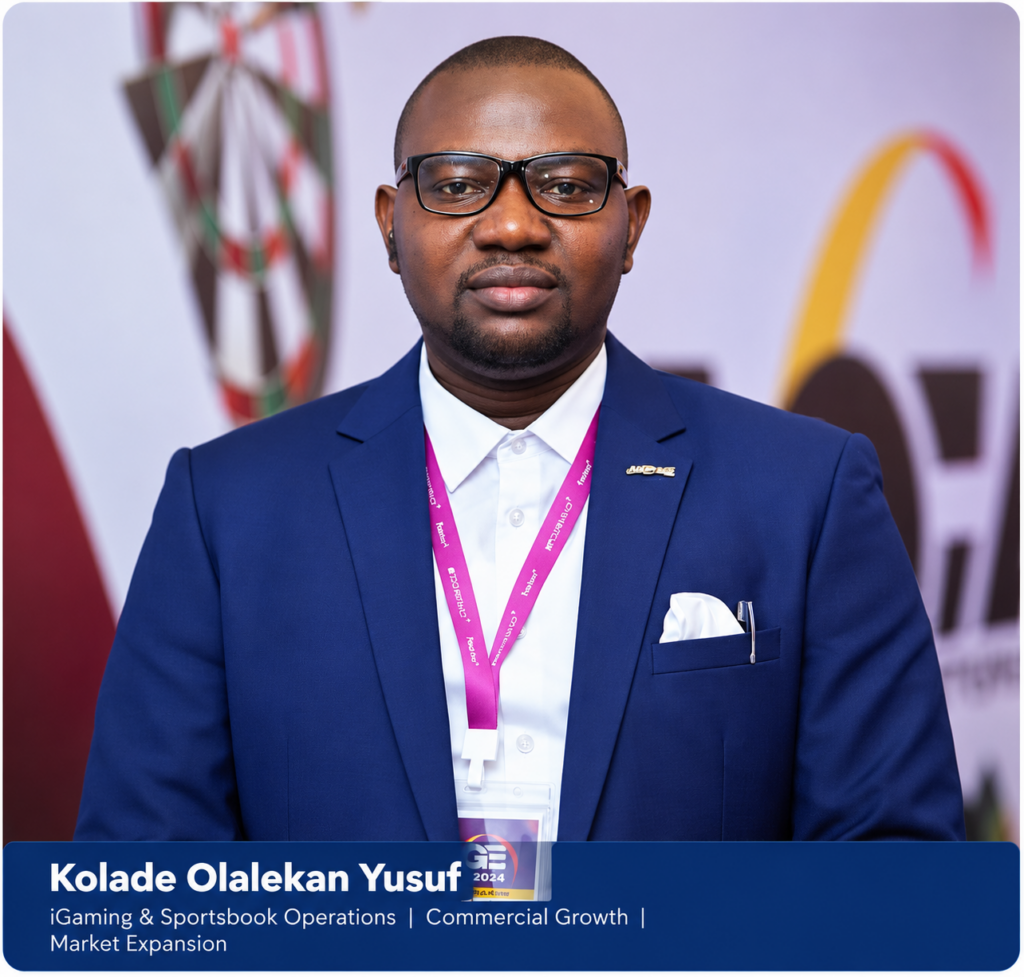
Kolade Olalekan Yusuf is an experienced iGaming and sportsbook professional with over a decade of industry experience spanning sportsbook operations, commercial management, business development, platform launches, marketing, affiliate management and market expansion.
His expertise focuses on sustainable business growth, operational efficiency, customer acquisition and retention, platform performance and profitability within the African gaming industry.
With a strong understanding of the Nigerian and wider African betting landscape, Kolade advocates commercially sustainable growth, responsible gaming practices and data-driven operational strategies.
Editor’s Note: This article is a guest contribution published by iBetAfrica. The views and opinions expressed are those of the author and do not necessarily reflect the editorial position of iBetAfrica.