



Juba, South Sudan | 28 October 2026
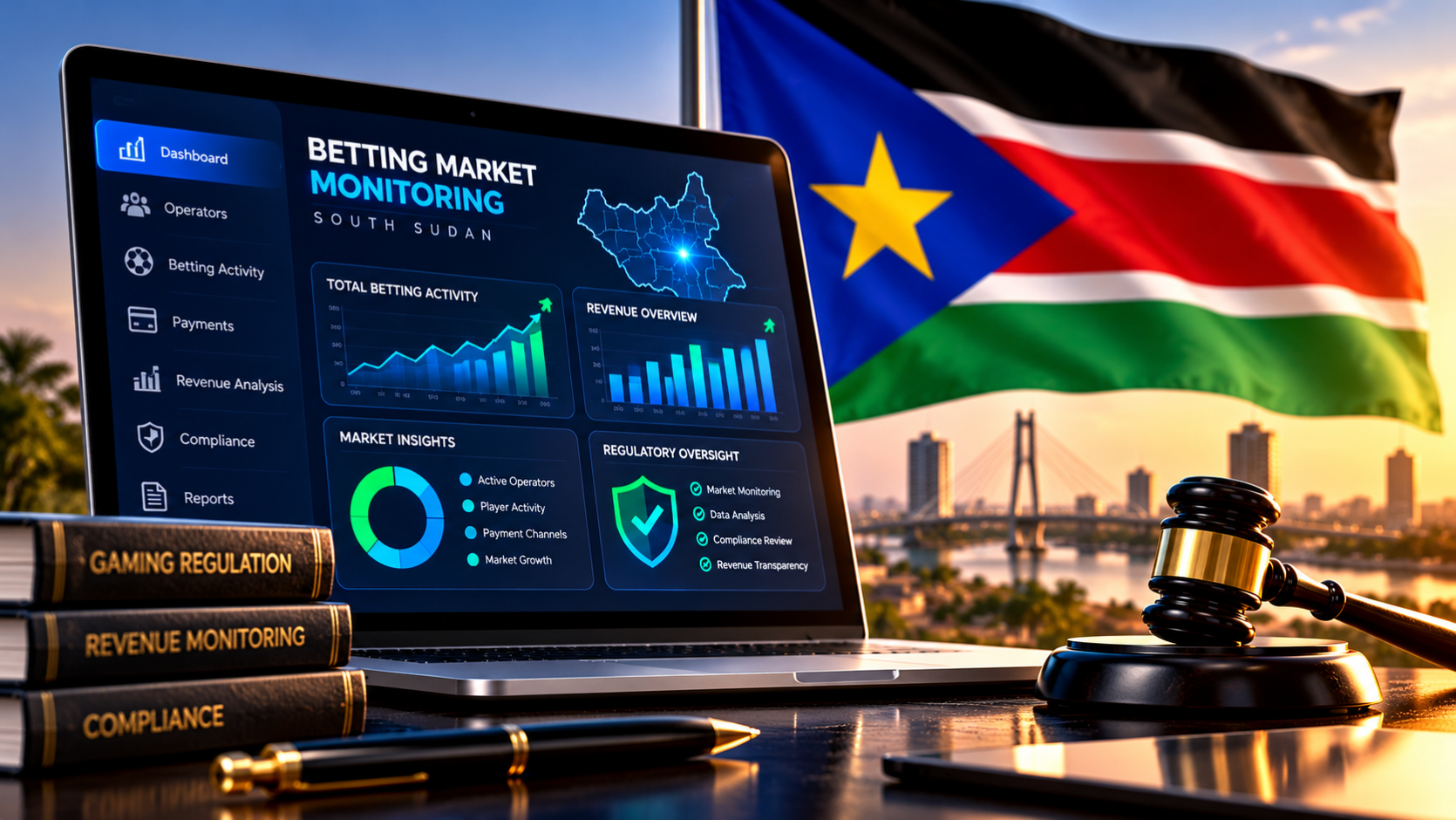
South Sudan has taken a step towards technology-driven gambling oversight following the completion of a betting market monitoring pilot conducted by Evidentia AI, a gaming revenue intelligence and compliance technology company.
The four-week pilot was undertaken in collaboration with the Department of Betting, Gaming and Lotteries under the country’s Ministry of Finance and Planning.
Its objective was to provide authorities with an independent, evidence-based understanding of betting market activity, including the operators active in the market, player payment patterns and areas where regulatory oversight could be strengthened.
The findings have been presented to the Department, which will determine whether and how to use them in future regulatory initiatives.
Understanding the Four-Week Pilot
Unlike conventional gambling monitoring systems that require direct access to operators’ platforms, the Evidentia AI pilot was conducted without integrating into existing betting systems.
According to the company, the exercise involved no access to operators’ internal systems, no use of official government records and no financial transactions.
Instead, the review relied on observations verified against live sources to develop an independent picture of the betting environment.
This approach was designed to help regulators assess market activity before committing to more extensive technical infrastructure.
The detailed findings remain with the South Sudanese authorities and have not been publicly disclosed.
Government Welcomes Evidence-Based Oversight
Daniel Apuk Deng Reech, Director for Betting, Gaming and Lotteries at the Ministry of Finance and Planning, welcomed the initiative as an initial step towards strengthening regulatory oversight.
He indicated that the Department would carefully consider the findings while maintaining its commitment to transparency, accountability and regulation in the public interest.
Evidentia AI’s Commercial Director, Ajibola Abdulkadir, described the project as an opportunity to demonstrate how independent market intelligence can help authorities understand betting activity without requiring immediate integration with operator systems.
The company also emphasized that decisions concerning the findings remain with the South Sudanese government.
Could Real-Time Gaming Monitoring Follow?
Evidentia AI identifies real-time transaction monitoring as a potential subsequent phase of its technology approach.
Such systems are designed to help authorities independently assess gross gaming revenue, compare reported figures against licensing and taxation records, and identify potential compliance gaps.
However, South Sudan has not announced a nationwide deployment of Evidentia AI’s real-time monitoring technology as part of this pilot announcement.
Any future implementation would depend on government decisions, technical arrangements and applicable regulatory requirements.
Why Gaming Revenue Visibility Matters
Accurate gaming revenue information is increasingly important for governments seeking to improve regulatory supervision and public revenue accountability.
Without reliable market data, authorities may struggle to evaluate the scale of betting activities, assess compliance or determine whether reported gaming revenues reflect actual market conditions.
Digital monitoring tools could support more informed decisions by providing independently verifiable information.
Nevertheless, their implementation also raises important questions concerning data protection, commercial confidentiality, cybersecurity and the independence of technology providers.
Implications for Africa’s iGaming Industry
South Sudan’s pilot reflects growing interest in technology-enabled gaming regulation across Africa.
For regulators, independent market assessments may provide an initial understanding of gambling activity before the introduction of more comprehensive oversight systems.
For licensed operators, transparent and consistently applied monitoring standards could help establish greater confidence in regulatory processes.
For gaming technology and payment infrastructure companies, the development highlights potential opportunities in compliance analytics, revenue assurance and reporting solutions.
However, the commercial and regulatory implications will depend on the measures South Sudan ultimately adopts.
The completion of a pilot should therefore be viewed as an exploratory regulatory development rather than confirmation of a new mandatory monitoring system.
Conclusion
South Sudan’s collaboration with Evidentia AI marks an early move towards evidence-based oversight of its betting market.
By completing a four-week independent review, the Department of Betting, Gaming and Lotteries has obtained findings that may help inform future decisions on regulatory monitoring and revenue accountability.
The next development to watch will be whether the government proceeds with additional assessments, introduces new reporting requirements or considers a real-time monitoring framework.
iBetAfrica will continue following this development and its implications for gaming regulation, compliance technology and sustainable market growth across Africa.