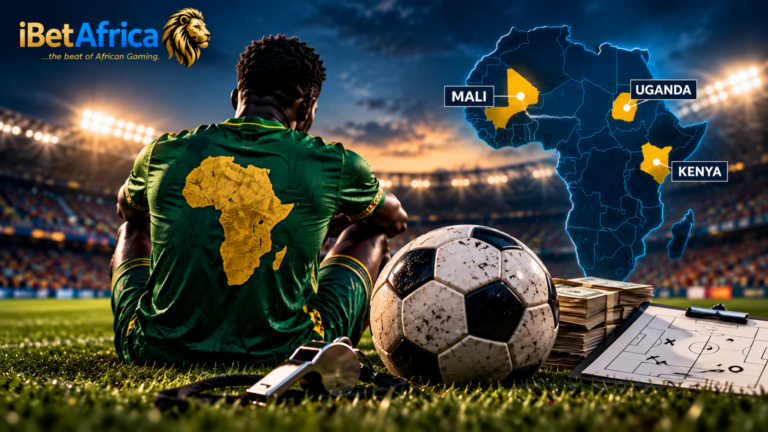




Africa’s rapidly expanding sports betting industry is bringing renewed attention to one of the biggest threats facing the relationship between football and betting: match manipulation.
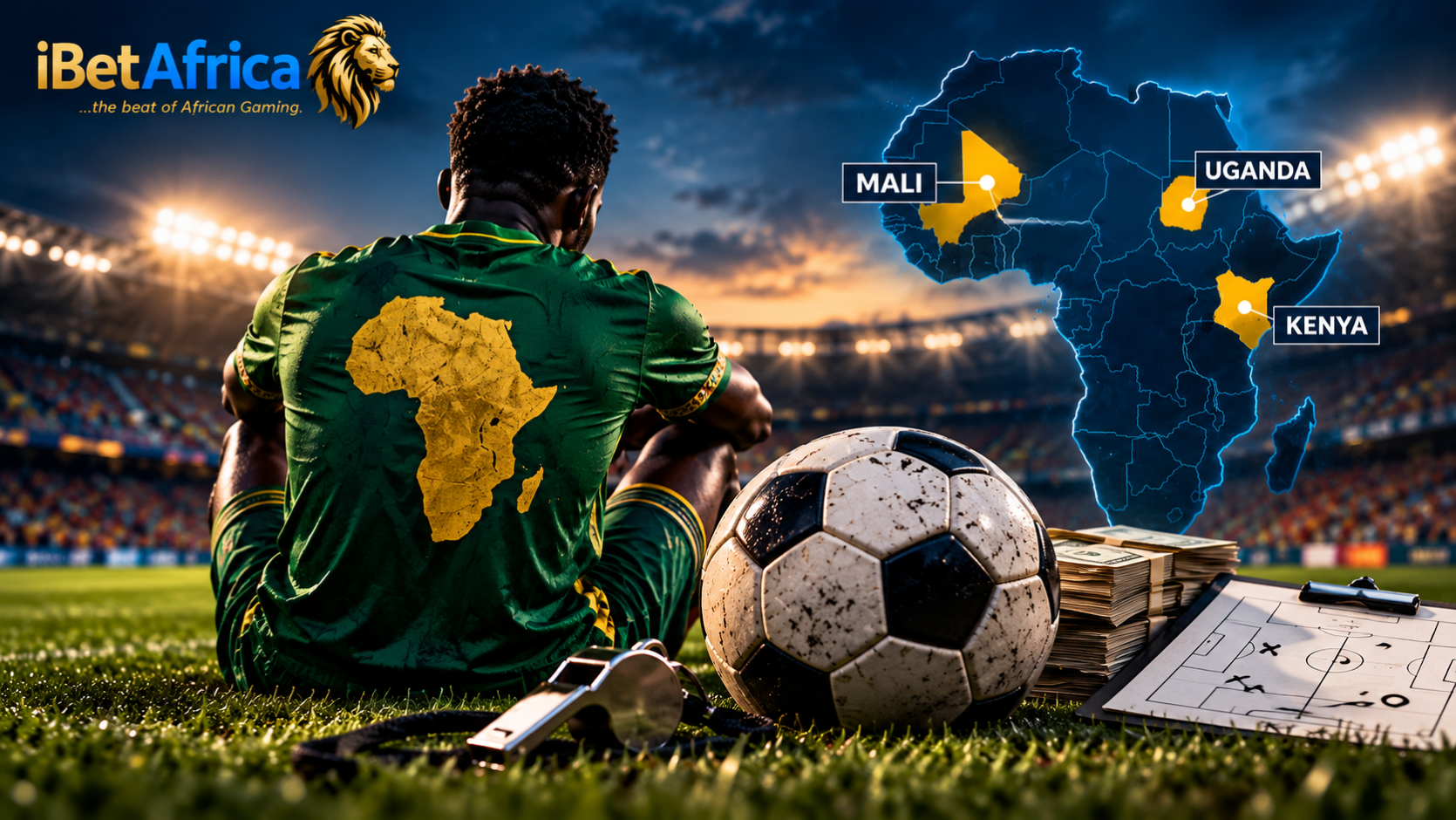
Recent developments across Uganda, Mali and Kenya show authorities taking different approaches to protecting the integrity of sporting competitions, ranging from disciplinary investigations and sanctions to proposed criminal penalties.
The issue is becoming increasingly important as betting markets expand across the continent and technology makes it possible for suspicious betting activity to cross national borders almost instantly.
Uganda Steps Up Enforcement
Uganda has become one of the clearest examples of football authorities taking direct action against suspected match manipulation.
The Federation of Uganda Football Associations (FUFA) has pursued several integrity cases in recent years, including investigations involving players, referees and football administrators.
In 2024, FUFA provisionally suspended 13 individuals while investigating an alleged match-manipulation scheme. FIFA later extended sanctions against seven Ugandans worldwide after domestic disciplinary action.
Enforcement has continued. In June 2026, FUFA’s Ethics and Disciplinary Committee found four players and a club administrator guilty of manipulating a Uganda Premier League fixture between Lugazi FC and Buhimba United Saints. Former player Feni Ali received a lifetime ban after FUFA said he acted as an intermediary between players and match-fixers.
The cases demonstrate the increasing complexity of protecting football competitions as betting markets become more interconnected.
Mali Opens Integrity Investigation
Mali is also confronting integrity concerns.
The Malian Football Federation, FEMAFOOT, referred the Ligue 1 fixture between Afrique Football Elite and AS Korofina, played on 10 June, to its Independent Ethics Commission following concerns surrounding the match.
Importantly, the referral itself does not establish wrongdoing. FEMAFOOT’s ethics body is responsible for reviewing the available evidence and determining whether any breach occurred.
The case illustrates why transparent investigative procedures are essential when suspicious activity is identified.
Kenya Considers Tougher Legal Measures
Kenya is approaching the problem from another direction: legislation.
The Sports (Amendment) Bill 2026 seeks to establish a clearer legal framework for dealing with manipulation of sporting competitions.
Following amendments in the National Assembly, proposed offences include offering or receiving an undue advantage, conspiring to manipulate a competition, deliberate underperformance and misuse of inside information for betting purposes.
If enacted in the form passed by the National Assembly, violations could attract a fine of up to KSh10 million or three times the value involved, whichever is higher, imprisonment for up to five years, or both.
The bill has progressed to the Senate and must still complete the legislative process before becoming law.
Financial Vulnerability Remains a Major Concern
Beyond regulation and punishment lies a more difficult question: why do players and officials become vulnerable to manipulation?
Former professional footballer and sports-integrity specialist Moses Swaibu argues that financial vulnerability can create opportunities for match-fixers, particularly in lower divisions, youth competitions and other parts of football where participants may have weaker financial security.
This makes prevention just as important as enforcement.
Paying players and officials reliably, educating participants about approaches from fixers, establishing confidential reporting systems and monitoring suspicious betting patterns can all form part of a stronger integrity framework.
A Continental Challenge
Match manipulation is not uniquely African. It is an international problem involving betting markets, organzsed networks, sporting organizations and financial activity that can cross jurisdictions.
But Africa’s fast-growing regulated betting industry makes the issue particularly important for the continent.
Operators depend on credible sporting events. Regulators depend on trustworthy betting markets. Football organizations depend on public confidence in their competitions.
If supporters begin questioning whether the result on the pitch is genuine, the damage extends far beyond one match.
As Africa’s sports betting ecosystem grows, protecting the integrity of the underlying sporting product will increasingly require cooperation between football authorities, regulators, licensed betting operators, law-enforcement agencies and international integrity organizations.
For Africa’s betting industry, integrity is no longer simply a sporting issue.
It is becoming a fundamental part of building a sustainable and trusted gaming market.
— iBetAfrica
…the beat of African Gaming.