


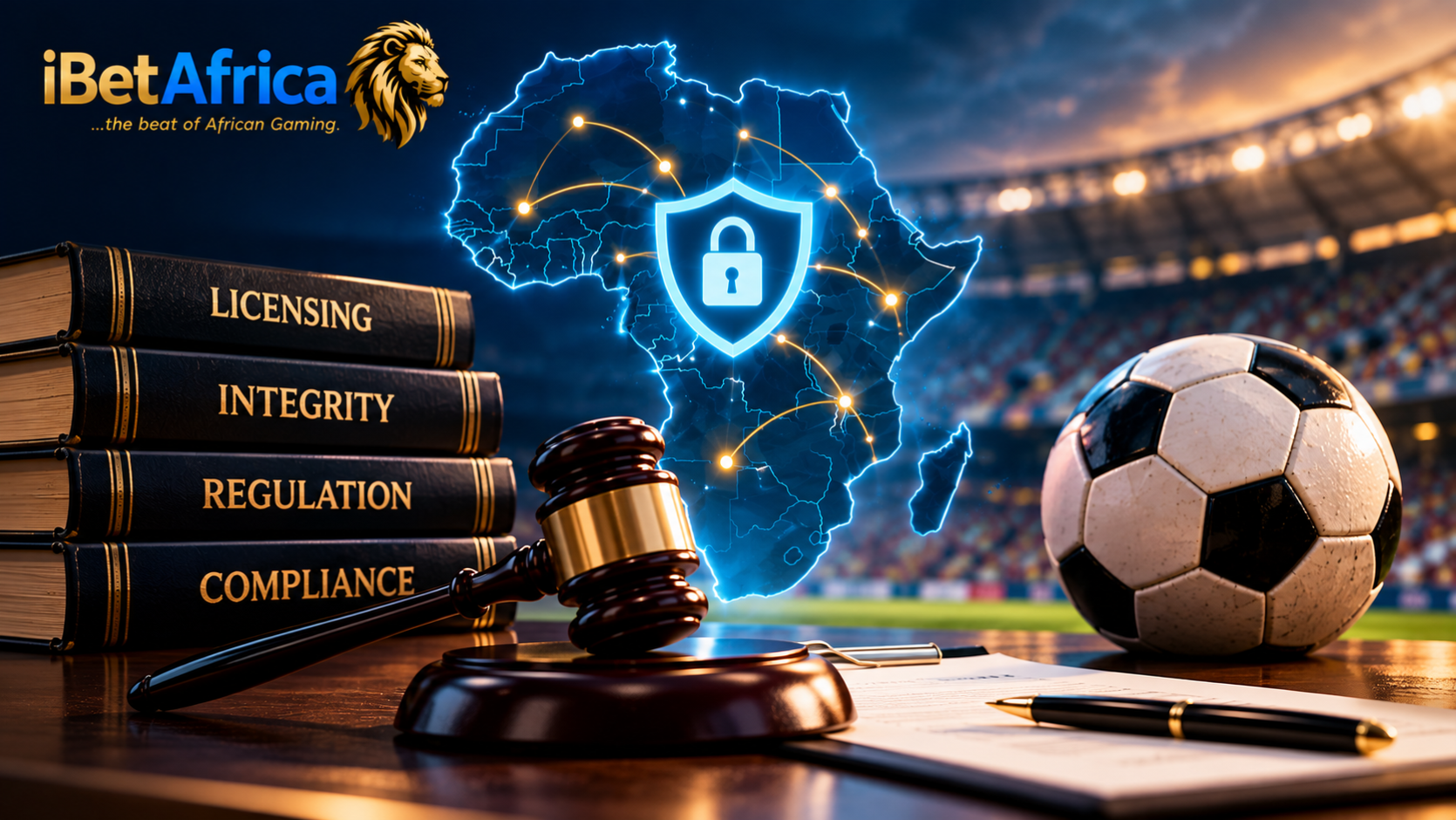
As regulated sports betting continues to expand across Africa, a major regulatory question is emerging:
Should betting-integrity monitoring become a formal requirement for obtaining and maintaining a gaming license?
The International Betting Integrity Association (IBIA) is increasingly making the case for stronger integration between licensing, operator monitoring and international information sharing across African markets.
IBIA CEO Khalid Ali has stressed that Africa’s expanding regulated betting sector creates both opportunity and responsibility for regulators, operators and sporting bodies.
What the Numbers Actually Tell Us
According to IBIA, 117 suspicious betting alerts relating to African sporting events were recorded between 2021 and 2025, including 31 during 2025.
A further 17 alerts were recorded during the first half of 2026.
But those figures require careful interpretation.
More alerts do not automatically mean that match-fixing is becoming more common.
As more licensed Africa-facing operators participate in integrity-monitoring networks, more account-level betting information becomes available for analysis. Better monitoring can therefore uncover suspicious patterns that previously might have gone undetected.
That distinction is important.
The objective should not simply be to count alerts, but to strengthen the systems capable of identifying, investigating and responding to credible threats.
Why Licensing Matters
Gaming licenses traditionally focus on areas such as ownership, financial suitability, player protection, anti-money-laundering controls, responsible gambling and technical standards.
Betting integrity adds another dimension.
A sportsbook may comply with financial and consumer-protection requirements while still operating in an ecosystem vulnerable to manipulation of the sporting events on which customers are betting.
That is why the conversation around integrity and licensing is becoming increasingly important.
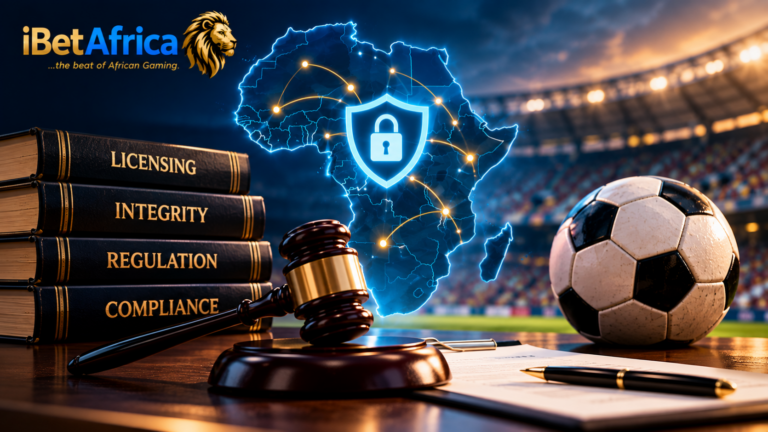
IBIA has advocated efficient national licensing combined with structured participation in international integrity monitoring.
Such an approach would not necessarily require African countries to adopt identical regulations.
Instead, national regulators could retain control over their individual licensing regimes while requiring licensed sportsbooks to participate in recognized monitoring, reporting and intelligence-sharing mechanisms.
Betting Is Increasingly Cross-Border
One of the biggest challenges is that suspicious betting activity does not necessarily originate in the country where a sporting event takes place.
Online betting accounts, payment systems and international sportsbooks allow betting activity to move across jurisdictions.
That makes cooperation particularly important.
A suspicious pattern connected to a football match in one African country may potentially be identified through betting activity elsewhere.
No single regulator, operator or football federation can easily address that challenge in isolation.
Operators Have a Role to Play
Licensed betting operators possess information that can be extremely valuable to integrity investigations.
Account activity, unusual betting patterns and transaction data can help identify behaviour that deserves further investigation.
IBIA’s Global Monitoring & Alert Platform brings together operator intelligence to identify and communicate suspicious betting activity to relevant authorities.
The organization says its monitoring operation covers more than 1.5 million sporting events annually.
IBIA has also expanded its African engagement, including discussions with African gambling regulators and a partnership with the African iGaming Alliance.
Regulation and Cooperation Must Work Together
Integrity monitoring alone cannot eliminate match manipulation.
Football federations need effective disciplinary structures. Governments need appropriate legal frameworks. Regulators need enforcement capabilities. Operators need reporting systems, and players and officials need education about the risks of manipulation.
Law enforcement may also be required where suspected activity crosses into criminal conduct.
The most effective model is therefore likely to involve cooperation rather than dependence on any single organization.
What Comes Next for Africa?
Africa’s regulated betting industry is developing at different speeds across different jurisdictions.
Some markets have mature licensing structures, while others are still modernizing their regulatory frameworks.
That creates an opportunity.
Countries developing or reviewing their betting regulations can consider integrity mechanisms at the design stage rather than attempting to introduce them only after problems become established.
The debate should therefore move beyond whether match manipulation is purely a football problem.
For regulators, operators and sporting bodies, the bigger question is how integrity protection should fit into the architecture of Africa’s regulated betting industry.
As the market expands, credible sports and credible betting markets will increasingly depend on each other.
For Africa’s next generation of gaming regulation, integrity could become just as important as licensing itself.
— iBetAfrica
…the beat of African Gaming.