



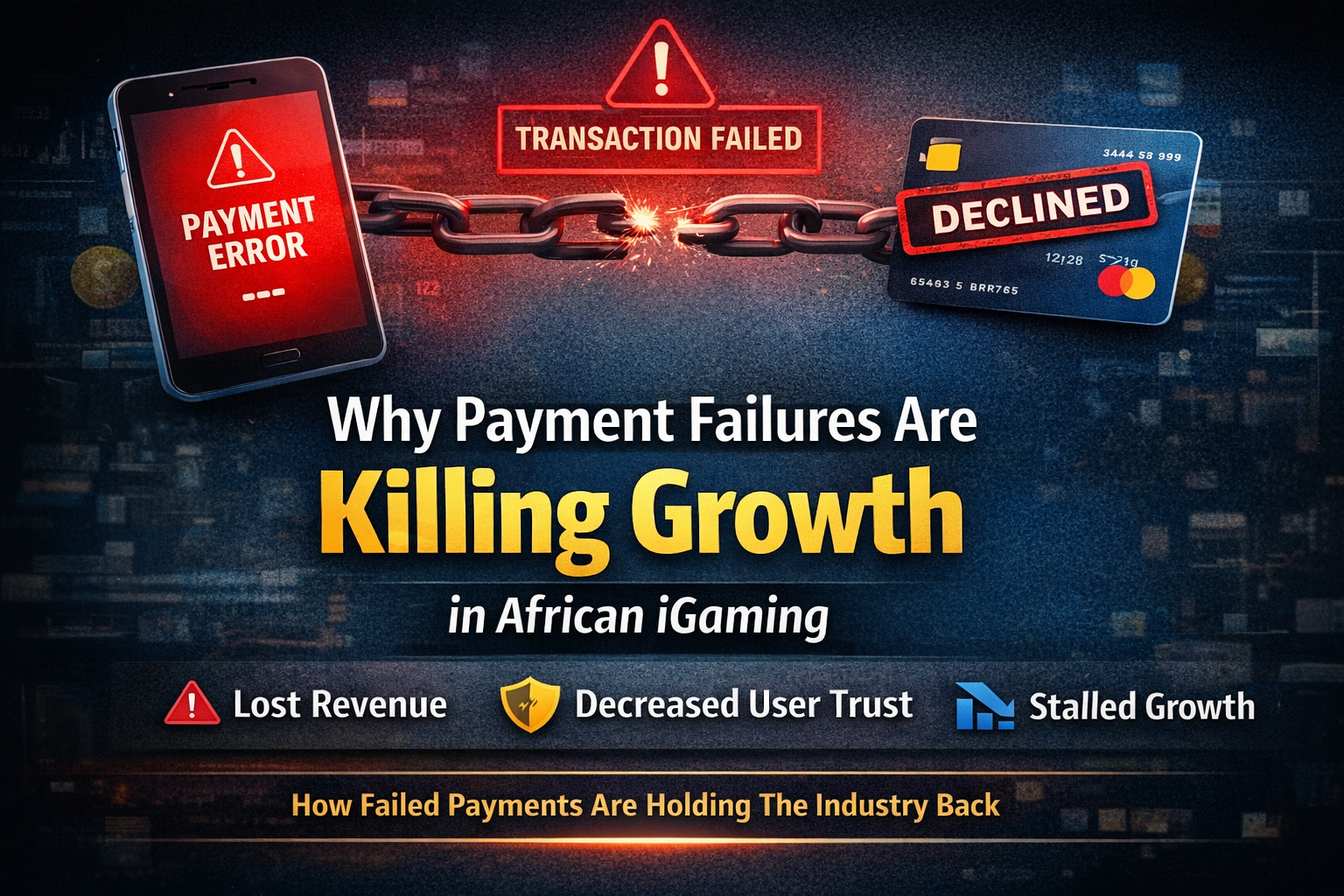
Africa’s iGaming industry is growing fast, but behind that growth is a major problem many businesses are still struggling to solve which is, payment failures.
From failed deposits to delayed withdrawals, payment issues are quietly affecting user trust, revenue, and long-term growth.
For operators, fintech companies, and industry stakeholders, this is not just a technical issue. It is a business-critical challenge.
In this article, we break down why payment failures are holding back African iGaming growth and what needs to change.
The Reality of Payments in African iGaming
Payments are at the center of every iGaming operation.
If users cannot:
- deposit easily
- withdraw quickly
- trust the payment process
then the entire system breaks down.
In many African markets, payment infrastructure is still evolving. This creates friction that directly affects both users and operators.
1. Failed Transactions Reduce User Trust
One of the fastest ways to lose a customer is a failed payment.
When a user tries to deposit and it doesn’t go through, or when a withdrawal is delayed, frustration builds quickly.
Over time, this leads to:
- reduced customer confidence
- lower retention rates
- negative word of mouth
In a competitive market, trust is everything.
2. Payment Delays Affect Revenue Growth
Revenue in iGaming depends heavily on smooth and fast transactions.
When payments are delayed:
- users stop depositing
- high-value customers move to competitors
- operators lose daily revenue opportunities
Even small payment issues can lead to significant revenue loss over time.
3. Limited Payment Options Restrict Market Reach
Africa is not a one-size-fits-all market.
Different countries rely on different payment systems:
- mobile money
- bank transfers
- digital wallets
Operators that fail to support local payment options struggle to scale.
Without the right payment mix, businesses lose access to large segments of users.
4. Poor Payment Experience Impacts Customer Retention
User experience is not just about design, it includes payments.
A poor payment journey can lead to:
- abandoned transactions
- reduced engagement
- lower lifetime value
Even if acquisition is strong, retention will suffer if payments are unreliable.
5. Compliance and Regulatory Barriers Add Complexity
Payments in African iGaming are also affected by:
- regulatory restrictions
- cross-border transaction challenges
- currency limitations
These factors make it harder for operators to build seamless systems.
Without proper structure, payment systems become unstable and inconsistent.
The Role of Fintech in Solving Payment Challenges
Fintech companies are playing a major role in improving the situation.
Innovations in:
- mobile payments
- payment gateways
- fraud prevention
- transaction speed
are helping reduce friction in the system.
However, adoption and integration still remain a challenge for many operators.
Why Connection in the Ecosystem Matters
Payment challenges cannot be solved in isolation.
Growth in African iGaming depends on strong collaboration between:
- operators
- fintech providers
- regulators
- ecosystem platforms
This is where platforms like iBetAfrica become important.
By connecting the right players, businesses can:
- find reliable payment partners
- stay informed about industry changes
- access opportunities for growth
What Needs to Change Going Forward
To unlock real growth in African iGaming, businesses need to:
- prioritize payment experience as a growth strategy
- integrate multiple local payment solutions
- partner with reliable fintech providers
- stay updated on regulatory requirements
- focus on speed, reliability, and user trust
In conclusion, The growth of iGaming in Africa is undeniable, but payment failures remain one of the biggest barriers to scale.
Businesses that solve this problem will not only improve user experience but also unlock new levels of growth and profitability.
The future of African iGaming will be shaped by how well the industry can build reliable, fast, and trusted payment systems.
Finally, as the ecosystem continues to evolve, platforms that connect operators, fintech providers, and industry stakeholders will play a key role in driving progress and enabling smarter growth across the African iGaming space.