


Kenya’s gambling industry is entering one of the most important regulatory periods in its recent history as operators navigate a new licensing regime while awaiting a High Court judgment that could influence the cost and structure of doing business in one of Africa’s largest betting markets.
At the centre of the uncertainty are Kenya’s Gambling Control (Licensing) Regulations, 2026, introduced as part of the country’s transition to the Gambling Control Act, 2025.
The regulations establish the operational framework for Kenya’s new gambling licensing system under the Gambling Regulatory Authority (GRA).
But several provisions — particularly those involving licensing fees and minimum capital requirements — have faced a legal challenge.
That dispute is now approaching a crucial moment.
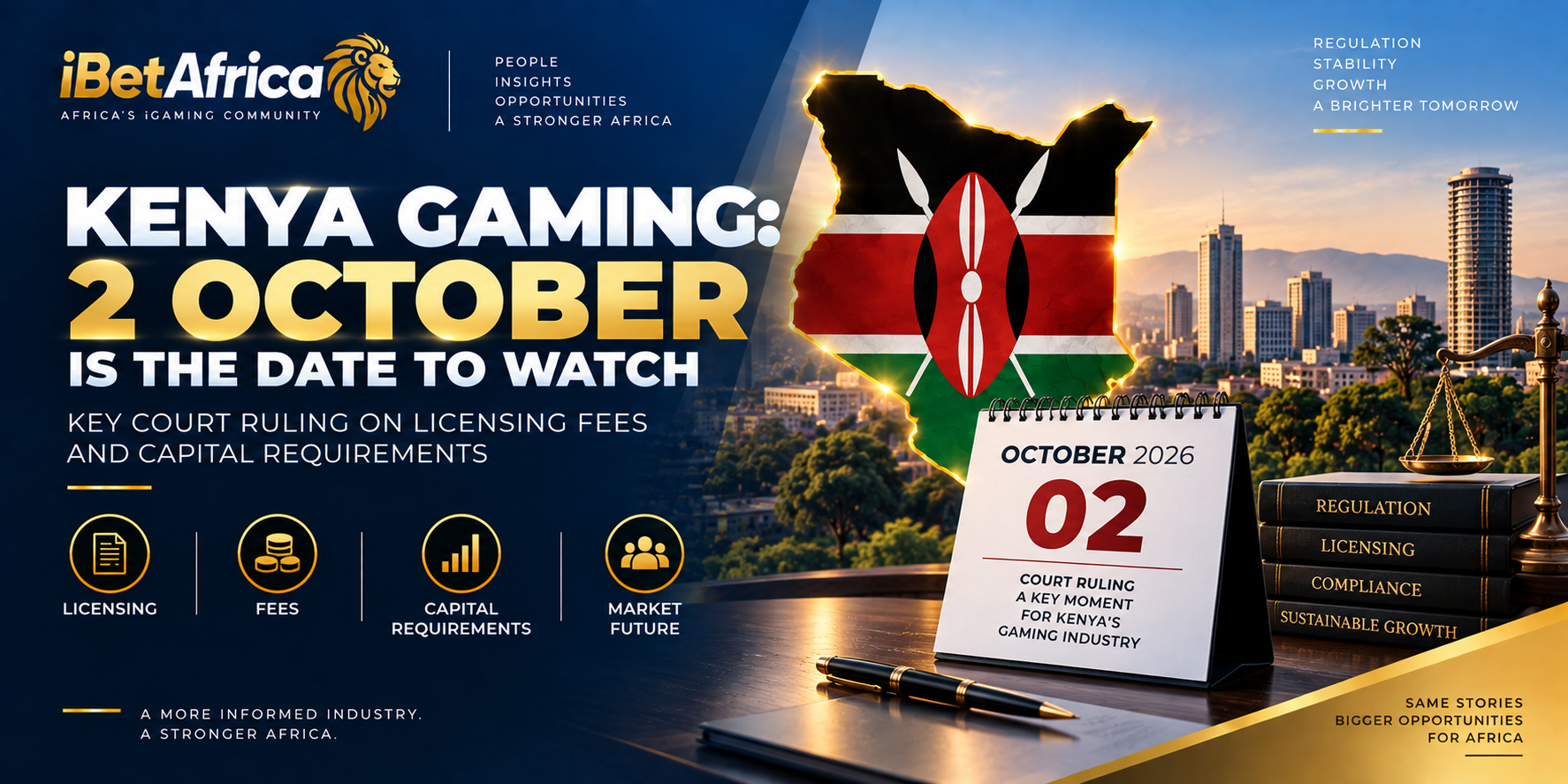
The High Court has scheduled judgment for 2 October 2026.
For operators, suppliers, investors, affiliates and payment providers connected to Kenya’s gaming ecosystem, the decision could have important implications.
Kenya Is Rebuilding Its Gambling Regulatory Framework
Kenya’s gambling industry is undergoing its most significant regulatory restructuring in years.
The Gambling Control Act, 2025 replaced the country’s previous framework and established the Gambling Regulatory Authority as the new regulator.
A series of regulations followed in 2026 covering areas including:
licensing,
gambling operations,
advertising,
foreign-based operators,
appeals,
and other regulatory requirements.
The objective is to create a more modern and comprehensive system for supervising an industry that has become increasingly digital.
But implementing such a major transition has not been straightforward.
The Licensing Regulations Face a Court Challenge
The Gambling Control (Licensing) Regulations, 2026 became the subject of judicial review proceedings brought by Thomas Buckley Opar Owuor and Ken Brance.
The Gambling Regulatory Authority and government authorities are among the respondents, while the Association of Gaming Operators Kenya (AGOK) and Safaricom PLC have participated as interested parties.
The applicants challenged several aspects of the new licensing framework.
Particular attention has centred on the scale of the new licence fees and minimum gambling-capital requirements.
The dispute therefore goes directly to one of the most important questions facing any regulated gaming market:
How high should the financial barrier to entry be?
The Court Initially Intervened
The High Court initially granted a stay affecting implementation of the licensing regulations.
That position was subsequently modified.
The Court narrowed the stay so that the wider licensing framework could continue operating while the contested financial provisions remained subject to judicial scrutiny.
Further proceedings addressed the practical difficulty created by attempting to process licences while the applicable fees were being challenged.
The Court subsequently allowed the regulator to proceed with the licensing process and collect the contested fees under an arrangement that preserves the possibility of refunds if those charges are ultimately found unlawful.
The result is an unusual situation.
Kenya’s licensing transition is moving forward, but an important part of its financial framework remains under judicial review.
Why 2 October Matters
The next major date is 2 October 2026.
That is when the High Court is scheduled to deliver judgment in the substantive judicial review proceedings.
The decision could provide much-needed clarity over the contested licensing provisions and determine how Kenya’s new framework develops from here.
For existing operators, clarity matters because licensing costs affect business planning.
For prospective market entrants, they affect investment decisions.
For technology providers and payment companies, they influence the number and type of operators capable of remaining in or entering the regulated market.
And for regulators, the outcome will influence how one of Africa’s most prominent betting jurisdictions completes its transition to the new system.
The Cost of Operating Is at the Centre of the Debate
The dispute is not simply technical.
It raises a broader question about the economics of regulated gambling in Africa.
Governments understandably want operators to demonstrate sufficient financial strength.
Higher capital requirements can potentially prevent undercapitalised companies from entering a market.
Licence fees also contribute revenue and help finance regulatory supervision.
But if entry costs become too high, industry stakeholders argue that they can reduce competition and make regulated operations less commercially attractive.
That tension exists across many African markets.
Regulators must balance revenue and consumer protection against the need to maintain a competitive legal market.
Kenya could become an important case study in how that balance is achieved.
Market Entry Could Become More Selective
Higher licensing and capital requirements can fundamentally change the composition of a gambling market.
Large operators may have the financial resources to absorb significant regulatory costs.
Smaller businesses may not.
That can lead to consolidation around fewer, better-capitalised operators.
For international companies considering Kenya, market-entry calculations therefore extend far beyond customer acquisition.
They increasingly include:
licensing expenditure,
capital requirements,
gaming taxes,
advertising restrictions,
technology compliance,
responsible-gaming obligations,
payment infrastructure,
and regulatory reporting.
Kenya remains commercially attractive.
But regulatory sophistication is raising the standard required to participate.
B2B Suppliers Should Be Watching Too
The court proceedings are not relevant only to sportsbooks and casinos.
Platform providers, game studios, aggregators, affiliates and payment companies should also pay attention.
Their commercial opportunities depend partly on the health and structure of the operator market.
If licensing requirements significantly change the number of active operators, suppliers could see changes in demand.
International B2B companies also need to understand whether their customers are operating under valid licences and meeting applicable regulatory requirements.
That is becoming particularly important as regulators across Africa expand enforcement beyond operators themselves.
Payments Are Part of the Regulatory Picture
Kenya’s gaming market is deeply connected to digital payments.
Mobile money has played an important role in the development of online betting in the country.
That makes payment infrastructure strategically important to both operators and regulators.
As Kenya’s regulatory framework becomes more sophisticated, PSPs and payment aggregators serving gaming companies will increasingly need to understand their merchants’ licensing position.
Regulatory uncertainty therefore has potential consequences beyond the gaming platform itself.
It can influence the wider infrastructure supporting the industry.
Kenya Remains One of Africa’s Most Important Betting Markets
Despite the regulatory uncertainty, Kenya remains one of Africa’s most closely watched gaming markets.
Its highly connected population, strong mobile-money ecosystem and established sports-betting culture have attracted significant local and international interest.
That makes what happens in Kenya influential beyond its borders.
Other African regulators regularly observe how neighbouring jurisdictions address gambling taxation, advertising, licensing and player protection.
Kenya’s transition could therefore provide lessons for markets undergoing similar reforms.
Regulation Is Becoming More Sophisticated
The bigger story is not simply that Kenya is increasing regulatory requirements.
It is that African gambling regulation is becoming more complex.
Licensing is increasingly being connected with:
capital adequacy,
responsible gaming,
advertising standards,
anti-money-laundering controls,
technology,
payments,
consumer protection,
and corporate governance.
The days when entering an African betting market primarily meant obtaining a licence and launching a sportsbook are disappearing.
Operators now need sophisticated regulatory strategies.
Legal Certainty Matters for Investment
One of the most important ingredients in a successful regulated market is predictability.
Businesses can adapt to strict regulation.
What is more difficult is uncertainty.
Operators making long-term investments need to understand the rules under which they will operate.
Suppliers need confidence that their customers can remain in the market.
Investors need visibility over costs.
Payment providers need clarity over merchant legitimacy.
And consumers benefit when licensed operators operate within a stable framework.
The 2 October judgment therefore matters not simply because of the fees under dispute.
It represents another step towards defining the regulatory certainty of Kenya’s new gambling regime.
What Should the Industry Watch?
Several questions will become clearer after the judgment.
Will the contested licence fees remain?
Will the capital requirements survive judicial review?
Will operators receive refunds or adjustments if any provisions are invalidated?
How quickly will the GRA complete outstanding licence applications?
And what will the final commercial landscape look like once the transition is complete?
Those questions will shape the next phase of Kenya’s gambling market.
2 October Is the Date to Watch
For now, the industry should avoid premature conclusions.
Kenya’s gambling sector has not reached the end of its regulatory transition.
It is in the middle of it.
The licensing machinery is moving while important parts of the framework remain before the Court.
That makes 2 October 2026 one of the most important dates on Africa’s immediate gaming regulatory calendar.
Whatever the outcome, the decision could influence operators already in Kenya, companies considering entry and the suppliers supporting them.
Kenya is not simply changing its gambling rules. It is redefining the conditions under which businesses will compete in one of Africa’s most important gaming markets.
And the next major chapter will be written in court.
iBetAfrica will continue monitoring the proceedings and will provide an update following the High Court’s scheduled 2 October judgment.