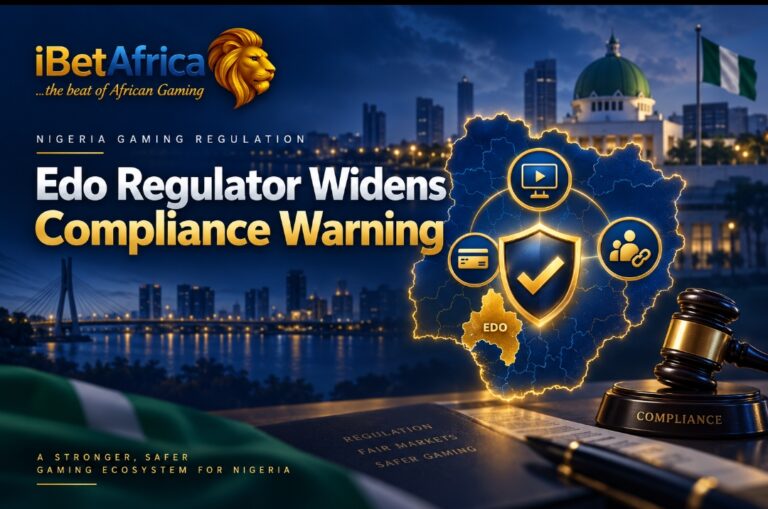



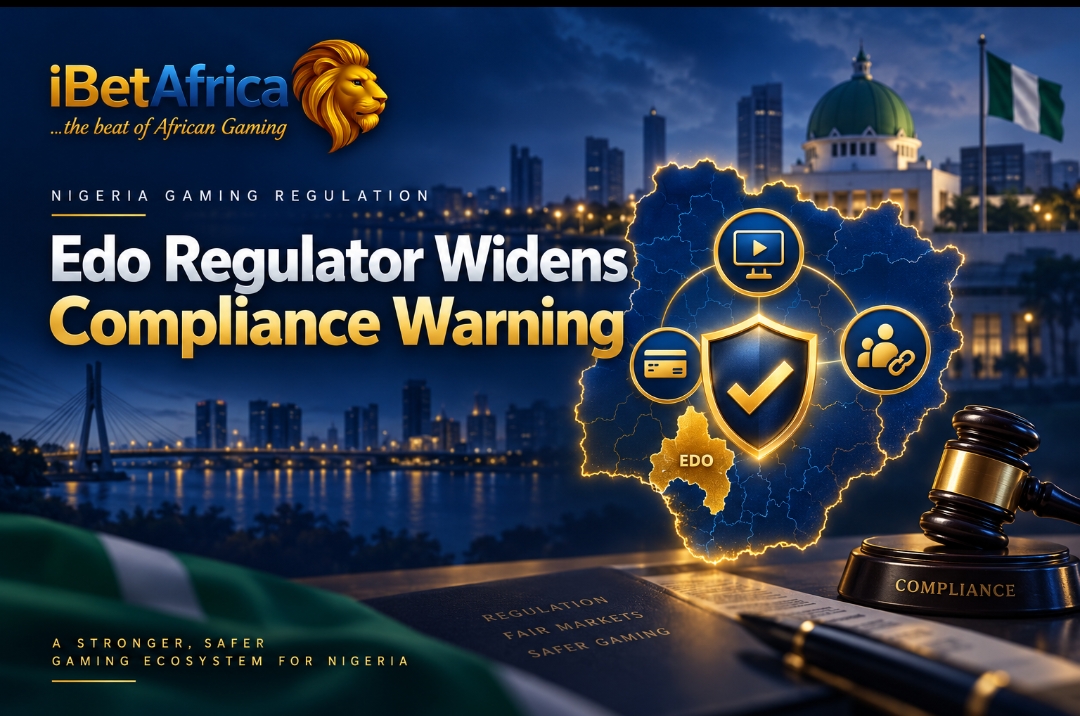
Nigeria’s gaming enforcement landscape is expanding beyond operators themselves, with the Edo State Gaming and Lottery Regulatory Commission warning payment providers, financial institutions, media organizations, advertising platforms and influencers against facilitating unlicensed gaming activity.
The warning follows regulatory action against Stake.com, which the Edo State Gaming and Lottery Regulatory Commission (ESGLRC), working with the Federation of State Gaming Regulators of Nigeria (FSGRN), says is not licensed in Edo State or any of FSGRN’s 24 member states.
The development is important because it signals that Nigerian state regulators are increasingly looking beyond betting operators and toward the wider ecosystem that enables gaming businesses to operate.
Enforcement Is Expanding Beyond Operators
The ESGLRC has warned that entities facilitating or promoting unlicensed gaming activities may also face regulatory consequences.
The warning specifically affects:
- Payment service providers
- Banks and other financial institutions
- Fintech companies
- Advertising platforms
- Media organizations
- Influencers
- Betting agents and other facilitators
Similar notices issued by the Lagos State Lotteries and Gaming Authority and other members of FSGRN have urged these businesses to carry out appropriate regulatory due diligence before supporting gaming operators.
This creates an increasingly important compliance issue for companies that may not traditionally consider themselves part of the regulated gaming sector.
Stake at the Centre of the Latest Action
According to Nigerian state regulators, Stake.com has not obtained the required licenses from FSGRN member states and has allegedly failed to register its operations or remit applicable gaming taxes and levies despite repeated compliance notices.
The regulators have therefore declared its operations unlawful within their jurisdictions and warned businesses against continuing to facilitate its activities.
Stake declined to comment when approached by iNTERGAME regarding the Nigerian enforcement action.
Payments Could Become a Major Enforcement Tool
The inclusion of payment providers is particularly significant.
Online gaming businesses depend heavily on reliable deposit and withdrawal infrastructure. If regulators increasingly require payment companies and financial institutions to verify gaming licenses before processing transactions, access to payments could become one of the strongest tools available for enforcing local licensing requirements.
For payment companies serving the gaming industry, this could mean stronger expectations around:
KYB, license verification, jurisdiction checks, merchant monitoring and ongoing compliance reviews.
It also reinforces the importance of understanding that a gaming license in one market does not necessarily authorize operations in another.
Affiliates and Media Are Also in the Spotlight
The regulator’s warning also extends to advertising and promotion.
That means affiliates, influencers, media organizations and digital advertising platforms may face greater pressure to verify whether an operator is properly licensed before promoting its services.
This could have major implications for Africa’s growing affiliate and gaming-media ecosystem.
For publishers and marketing partners, the compliance question may increasingly become:
“Is this operator licensed in the jurisdiction where our audience is located?”
rather than simply whether the operator holds a license somewhere internationally.
Nigeria’s State-Based Regulatory Structure Matters
The latest enforcement actions follow Nigeria’s evolving gaming regulatory landscape after the Supreme Court’s November 2024 judgment affirming the constitutional authority of states over lotteries, betting and gaming.
State regulators have increasingly relied on that ruling when asserting that operators must obtain appropriate state licences before offering gaming services within their jurisdictions.
For international operators, this makes Nigeria a market where regulatory strategy may need to be considered at state level rather than through a single national license.
What This Means for the Wider Gaming Ecosystem
The broader lesson is that gaming compliance is no longer limited to the operator.
A typical online gaming business depends on numerous partners, including:
payment providers, software platforms, affiliates, media companies, banks, marketing agencies and technology suppliers.
If regulators increasingly treat these businesses as part of the enforcement chain, they may be expected to carry out much stronger due diligence before supporting gaming merchants.
This could reshape how partnerships are structured across Nigeria’s gaming industry.
A Growing Compliance Question for African Gaming
Nigeria’s approach could also be watched closely by regulators elsewhere in Africa.
As gaming becomes increasingly digital, regulators have more opportunities to enforce licensing requirements indirectly through payment infrastructure, advertising channels and technology partnerships.
This means operators looking to expand across African markets will need to ensure that licensing, payments and marketing strategies are aligned from the beginning.
For payment providers, affiliates and media businesses, the message is equally important:
supporting gaming traffic increasingly carries its own regulatory responsibilities.
iBetAfrica will continue monitoring how Nigerian regulators apply these enforcement measures and whether similar ecosystem-wide compliance requirements emerge in other African gaming markets.