


Nigeria’s regulatory action against Stake.com is beginning to raise a wider question for the country’s gaming and sports industries: what happens to commercial partnerships when a betting operator is declared unlicensed in the markets where its brand is being promoted?
At the centre of that question is Enyimba International FC, one of Nigeria’s most successful football clubs.
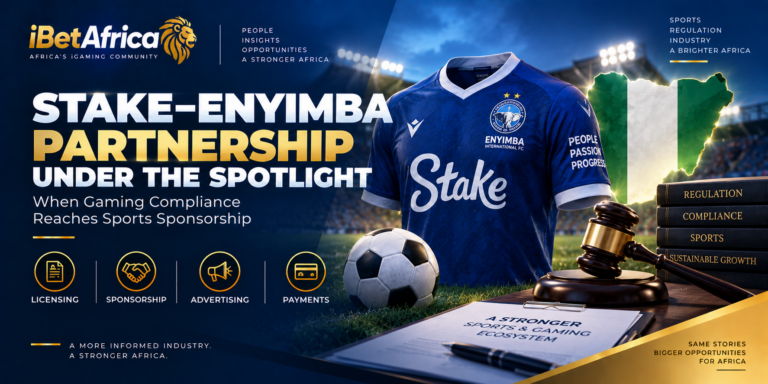
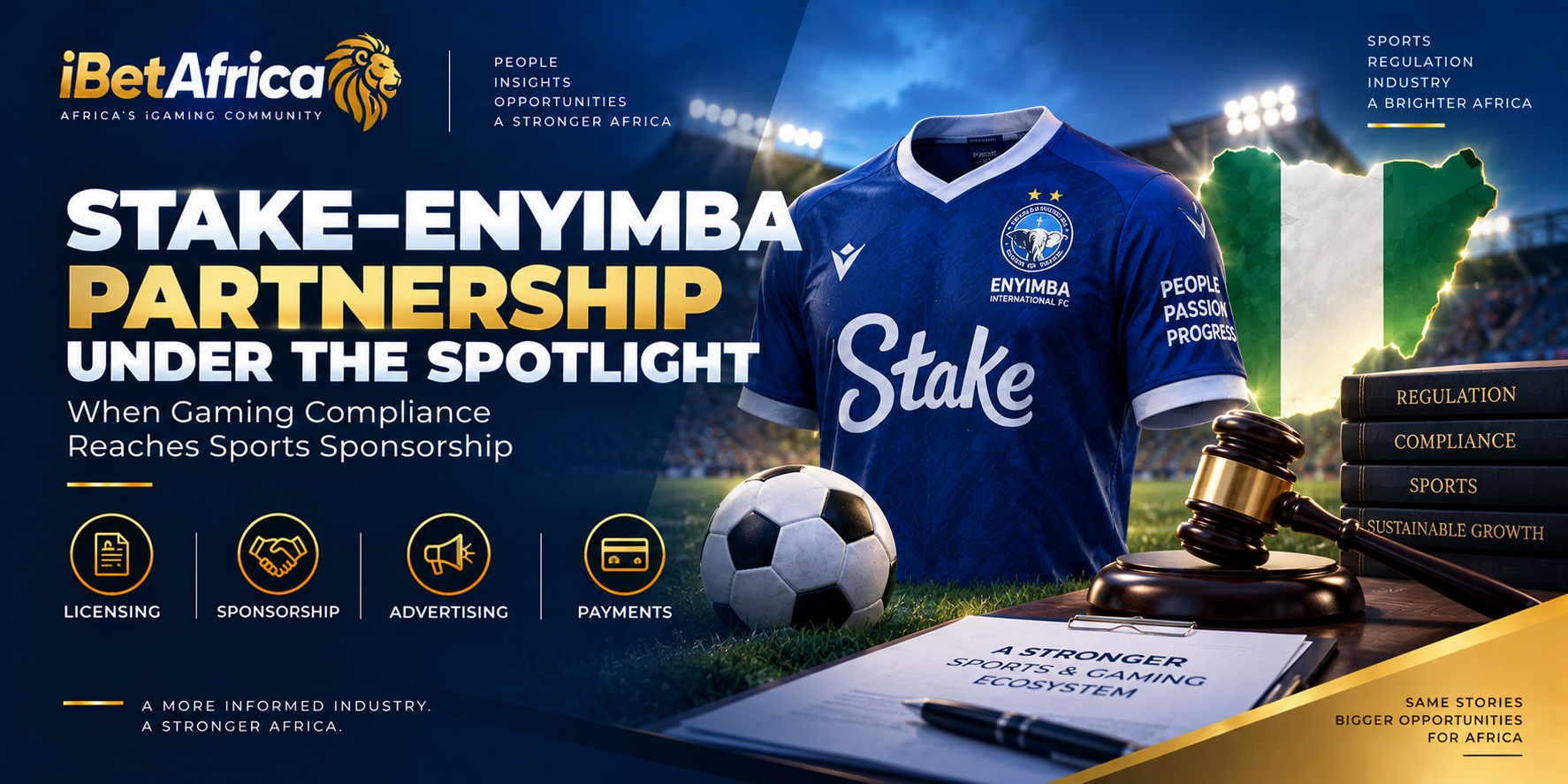
Stake became Enyimba’s main partner in 2023, marking the global betting brand’s first football partnership in Africa.
The company’s branding has since appeared prominently on the club’s shirts, connecting one of international betting’s most recognizable brands with one of Nigerian football’s biggest names.
But recent regulatory action against Stake across a group of Nigerian states has created uncertainty around the commercial relationship.
The issue is no longer simply about whether Stake can legally accept bets.
It is also about how gambling regulation can affect sponsorship, advertising, payments, affiliates, influencers and media exposure surrounding an operator.
Regulators Take Action Against Stake
The Lagos State Lotteries and Gaming Authority, working with the Federation of State Gaming Regulators of Nigeria (FSGRN), recently declared Stake’s gaming operations unlawful in Lagos and across the federation’s participating member states.
Regulators allege that Stake failed to register its operations and remit applicable gaming taxes and levies despite receiving multiple compliance notices.
Stake has also been added to Lagos State’s list of illegal gaming operators.
Similar notices have subsequently emerged from participating state regulators.
The regulatory action is significant because authorities have not limited their warnings to Stake itself.
They have also addressed companies and platforms that may facilitate the activities of unlicensed gambling businesses.
Payments, Advertising and Promotion Enter the Picture
Regulatory notices have specifically drawn attention to financial institutions, payment-service providers and businesses facilitating unlicensed gaming activity.
That substantially widens the potential compliance implications.
A gambling operator depends on an ecosystem.
Customers need payment channels.
Brands need advertising.
Operators use affiliates and influencers to acquire customers.
Sports sponsorship creates visibility.
Media campaigns strengthen brand recognition.
If regulators decide that an operator cannot legally provide gambling services within their jurisdiction, every commercial relationship supporting that activity can potentially attract greater scrutiny.
That is what makes the Stake situation particularly important.
The Enyimba Question
Stake continues to identify Enyimba as one of its football partnerships.
The company’s sponsorship page describes the Nigerian club as its first football partnership in Africa and says Stake’s branding appears on the front of Enyimba’s shirts.
That relationship was originally positioned as part of Stake’s ambitions to expand its presence across Africa.
Now the regulatory environment surrounding the brand has changed.
Enyimba is based in Aba, Abia State, and Abia is among the states associated with the Federation of State Gaming Regulators of Nigeria.
That creates an obvious question about how the sponsorship will operate while Stake’s licensing status remains disputed within the relevant regulatory framework.
But an important distinction must be made.
There has been no confirmed public announcement from Enyimba terminating the Stake sponsorship.
It would therefore be premature to report that the partnership has ended.
The accurate position is that the regulatory action has placed the relationship under increased scrutiny.
Sports Sponsorship Is More Than a Logo
Betting sponsorship in African football has become an important commercial relationship.
Operators gain visibility.
Football clubs receive valuable sponsorship revenue.
Supporters are introduced to betting brands through teams they already follow.
The relationship can include much more than shirt branding.
It may involve digital promotions, social-media campaigns, competitions, hospitality, fan experiences and promotional content.
That means regulators increasingly need to determine where ordinary sports sponsorship ends and gambling advertising begins.
The distinction becomes particularly important when the sponsor’s authority to offer gambling products is challenged.
Clubs May Need Stronger Regulatory Due Diligence
The Stake situation highlights an important lesson for African sports organizations.
Commercial due diligence on gambling sponsors can no longer focus solely on whether the company has money to fulfill the sponsorship agreement.
Clubs may increasingly need to understand:
whether the operator holds the required licenses,
where those licenses are valid,
whether the operator’s advertising is permitted,
whether promotional campaigns comply with local rules,
and what happens to the sponsorship if the operator loses regulatory approval.
This becomes particularly complex in countries where gambling regulation operates at state or provincial level.
Nigeria is a clear example.
A commercial agreement that appears straightforward at national level can become considerably more complicated when individual jurisdictions exercise regulatory authority.
Regulators Are Looking Beyond Operators
The wider African regulatory trend is becoming increasingly clear.
Enforcement is moving beyond the sportsbook.
Payment providers are being scrutinized.
Advertising agencies are being scrutinized.
Affiliates and influencers are being scrutinized.
Media platforms can face compliance obligations.
Sports partnerships may increasingly come under the same spotlight.
The logic is simple.
An unlicensed operator cannot build a significant market presence without infrastructure and promotion.
Regulators seeking to restrict illegal gambling therefore have an incentive to address the ecosystem that allows those businesses to reach consumers.
That approach can make enforcement substantially more effective.
Payments Could Become a Powerful Enforcement Tool
Payment infrastructure is particularly important.
An online gambling business may operate from outside a jurisdiction.
Its website may remain technically accessible.
But customers still need a way to deposit and withdraw funds.
That makes banks, fintech companies, mobile-money providers and payment aggregators strategically important to gambling enforcement.
Nigeria’s regulatory notices demonstrate that PSPs should therefore understand the licensing status of gaming merchants before processing transactions on their behalf.
For payment companies serving high-risk industries, regulatory due diligence is becoming increasingly important.
The ability to process payments is only one part of the equation.
The merchant must also be legally entitled to conduct the underlying business.
Affiliates and Influencers Should Pay Attention
The same principle applies to affiliates.
African betting marketing increasingly relies on social media, influencers, tipsters and digital publishers.
Those businesses can generate significant customer traffic for operators.
But promoting an unlicensed gambling brand may create regulatory exposure depending on the jurisdiction.
Affiliates therefore need to know more than commission percentages.
They need to understand the regulatory status of the companies they promote.
As African gaming regulation matures, that distinction is likely to become increasingly important.
Media Platforms Face Similar Questions
Gaming media also has responsibilities.
There is a difference between reporting on a gambling company as news and actively promoting its products to consumers.
That distinction becomes especially important when regulators have publicly challenged an operator’s legal status.
African gaming media platforms therefore need clear editorial and commercial policies separating independent journalism from advertising and affiliate promotion.
For the industry’s credibility, those boundaries matter.
A Bigger Question for African Football
The Stake–Enyimba situation could become part of a broader debate about gambling sponsorship in African sport.
Betting companies have become important commercial partners for football teams and competitions across the continent.
Those relationships provide funding to clubs operating in challenging commercial environments.
But they also place gambling brands directly in front of large audiences, including younger football supporters.
Regulators therefore face a balancing act.
Sports organizations need commercial investment.
Licensed operators need legitimate marketing opportunities.
But authorities also want advertising to come from companies that meet applicable regulatory and consumer-protection requirements.
Compliance Is Becoming Everyone’s Business
Perhaps the biggest lesson from the Stake situation is that gambling compliance no longer belongs exclusively to the operator.
A modern betting company sits inside a network of commercial relationships.
Operators.
Technology suppliers.
Payment companies.
Football clubs.
Affiliates.
Influencers.
Advertising agencies.
Media platforms.
Each can play a role in bringing a gambling product to market.
As African regulators become more active, every participant in that chain may need to understand the regulatory status of the businesses they support.
What Happens Next?
The most important development to watch now is whether Stake regularizes its position with the relevant Nigerian state regulators.
Another key question is whether Enyimba makes any public statement regarding the sponsorship.
Any change to the club’s shirt branding or promotional relationship would also be significant.
Until that happens, the sponsorship should not be described as terminated.
But the regulatory action has created a legitimate question about its future.
And that question extends far beyond one football club.
A Warning for Africa’s Gaming Ecosystem
The Stake case may ultimately become an important example of how gambling enforcement evolves across Africa.
Regulators are increasingly demonstrating that enforcement can reach beyond the operator itself.
A betting company’s license can affect its payments.
Its advertising.
Its affiliates.
Its sponsorships.
And potentially every commercial partner helping it reach consumers.
For African football clubs, media organizations, influencers and payment companies, that creates a straightforward lesson:
Before partnering with a gaming brand, regulatory due diligence matters.
Because in Africa’s increasingly regulated gambling industry, the consequences of an operator’s compliance position may no longer stop with the operator.
iBetAfrica will continue monitoring Stake’s regulatory position in Nigeria and any official development concerning its partnership with Enyimba International FC.