


Africa’s iGaming industry is expanding rapidly, driven by digital adoption, fintech innovation, and a growing user base across key markets. As the ecosystem evolves, more women are stepping into roles across operations, marketing, compliance, and leadership.
However, while progress is evident, there are still structural and industry-specific challenges that limit full participation and influence.
Understanding these challenges is not just about inclusion. It is about unlocking growth potential within the industry.
A Growing Presence, But Uneven Representation
Across Africa’s iGaming ecosystem, women are increasingly visible in various roles. From customer engagement and partnerships to product and compliance, their contributions are helping to shape how companies operate.
However, representation becomes more limited at senior and executive levels.
This gap is not unique to iGaming, but in a fast-growing and competitive industry, it creates a disconnect between talent availability and leadership diversity.
For companies looking to scale, this imbalance can affect decision-making, innovation, and long-term strategy.
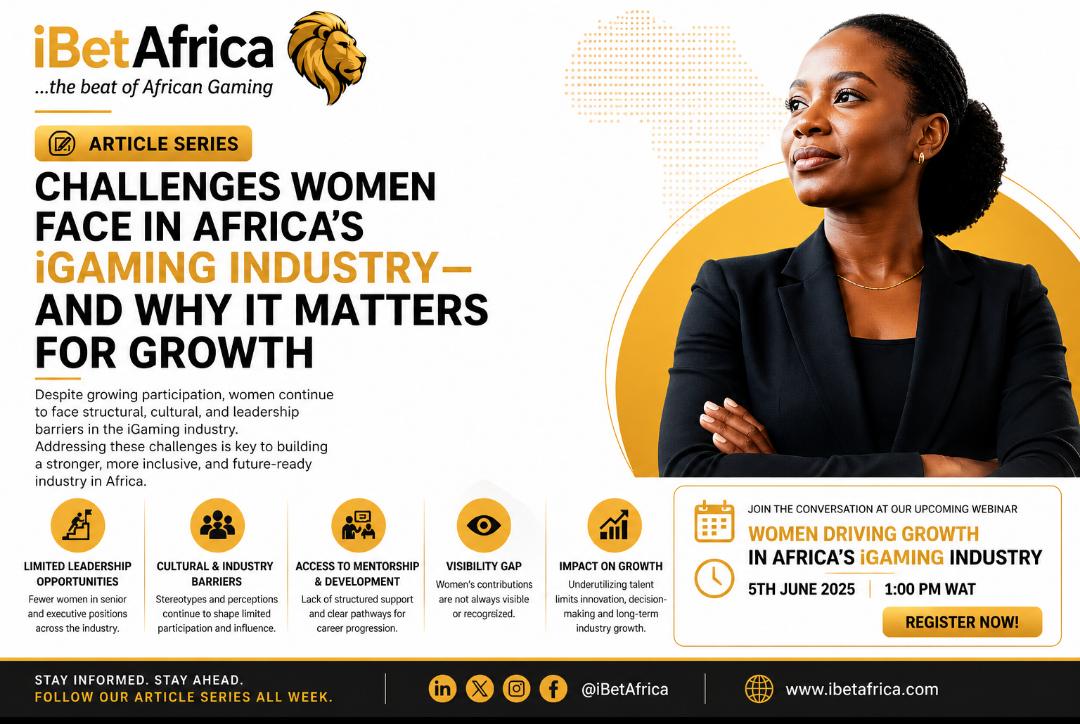
Limited Access to Leadership Opportunities
One of the key challenges is access to leadership pathways.
Many women enter the industry through functional roles such as marketing, operations, or customer support. While these roles are critical, they do not always provide a direct path to executive leadership.
In some cases, the absence of mentorship, structured career development, or leadership visibility slows down progression.
As a result, the industry risks underutilizing a growing talent pool.
Industry Perception and Cultural Barriers
In several markets, iGaming is still perceived as a male-dominated or highly informal sector.
This perception can influence hiring decisions, workplace dynamics, and even how professionals are viewed within the industry.
Cultural expectations in some regions may also limit participation, particularly in leadership or technical roles.
While these barriers are gradually shifting, they still impact how quickly the industry can evolve toward a more balanced structure.
The Confidence and Visibility Gap
Another challenge is visibility.
Even when women are actively contributing within the industry, their work is not always highlighted or recognized at the same level. This creates a gap in representation at industry events, panels, and leadership discussions.
Visibility plays a critical role in shaping influence. Without it, opportunities for growth, partnerships, and leadership become more limited.
This is why platforms, media, and industry stakeholders have an important role to play in amplifying diverse voices.
Why Addressing These Challenges Matters
For an industry built on growth, innovation, and user engagement, ignoring these challenges comes at a cost.
A more inclusive ecosystem allows companies to:
- access a wider talent pool
- improve decision-making processes
- better understand diverse user segments
- build stronger, more sustainable businesses
In Africa’s diverse market, these advantages are not optional. They are necessary for long-term competitiveness.
A Shift That Requires Intentional Action
Progress is happening, but it requires deliberate effort.
Companies, industry bodies, and platforms must:
- create clearer leadership pathways
- support mentorship and professional development
- increase visibility for women across the ecosystem
- encourage more inclusive hiring and representation
These steps are not just about fairness. They are about building an industry that is equipped for the future.
Africa’s iGaming industry is still in a growth phase, with significant opportunities ahead.
As more women enter and contribute to the ecosystem, addressing these challenges will be key to unlocking their full potential and shaping a more balanced, innovative, and competitive industry.