Africa continues to attract growing interest from international gaming operators seeking new opportunities for expansion.
With a young population, increasing internet penetration, growing smartphone adoption, and expanding digital payment ecosystems, the continent presents significant growth potential for the iGaming industry.
However, many international operators underestimate the complexity of African markets.
While opportunities are abundant, success requires more than simply replicating strategies that worked in Europe, Asia, or Latin America.
Here are some of the most common mistakes international operators make when entering Africa.
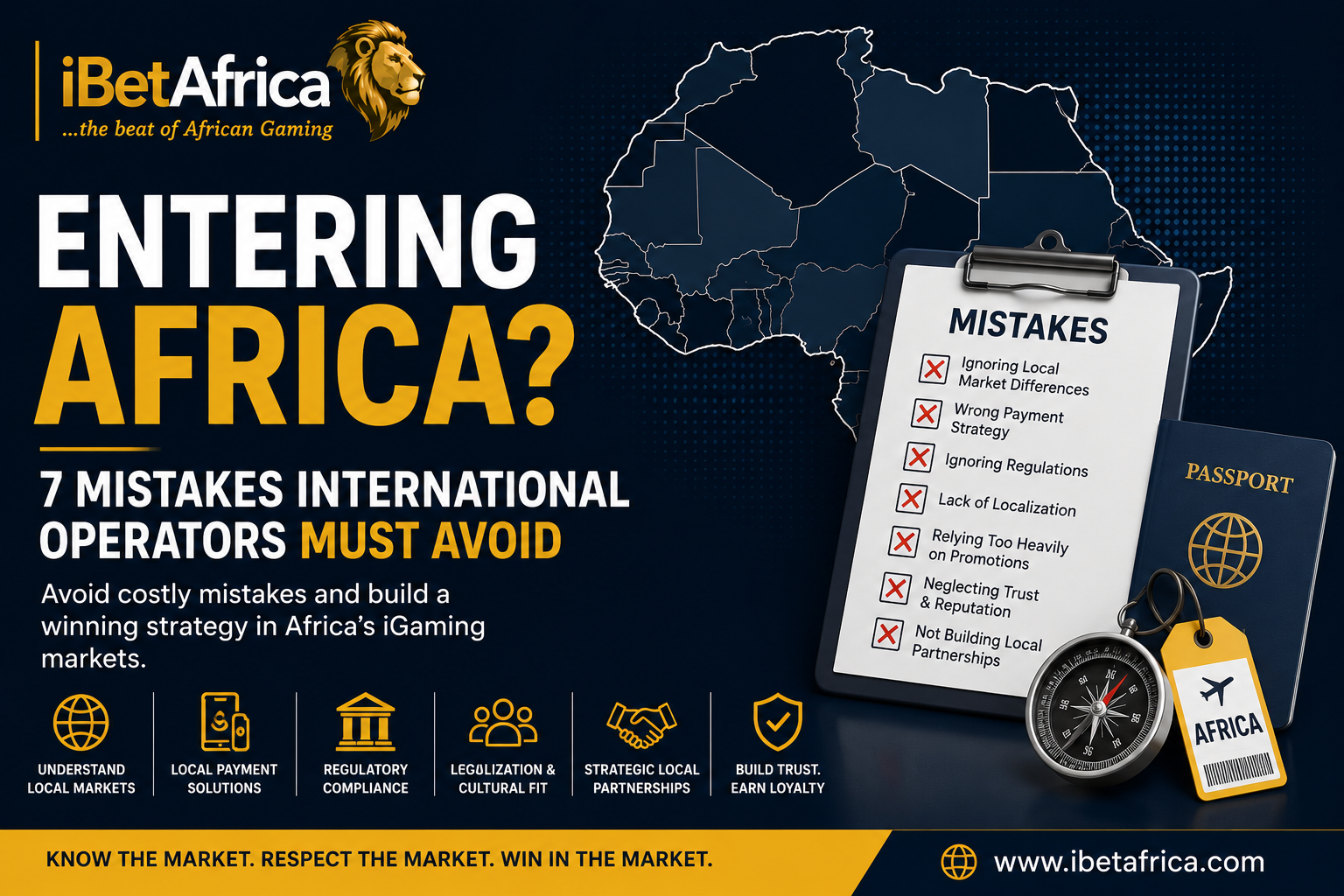
Treating Africa as One Market
One of the biggest mistakes is assuming Africa operates as a single market.
The continent consists of more than 50 countries, each with unique regulations, cultures, payment preferences, consumer behaviors, and economic realities.
What works in Nigeria may not work in Kenya. What succeeds in South Africa may fail in Ghana.
Operators must approach Africa as a collection of diverse markets rather than a single opportunity.
Ignoring Local Payment Preferences
Payments remain one of the most important factors influencing player experience.
Many operators enter African markets without fully understanding local payment methods.
Players often prefer mobile money solutions, local bank transfers, digital wallets, and region-specific payment options.
If deposits and withdrawals are difficult, players are likely to abandon the platform regardless of the quality of the gaming experience.
Underestimating Regulatory Requirements
Gaming regulations vary significantly across African jurisdictions.
Licensing requirements, taxation structures, advertising restrictions, and compliance obligations differ from country to country.
Operators that fail to understand local regulations can face costly penalties, operational disruptions, and reputational damage.
Regulatory research should be a priority before entering any new market.
Failing to Localize Content
Localization goes beyond language translation.
Successful operators adapt marketing campaigns, promotions, customer support, payment options, and content to local audiences.
Players are more likely to engage with brands that understand their culture, preferences, and needs.
A localized strategy often outperforms a generic global approach.
Overlooking Trust and Reputation
Many African consumers remain cautious when interacting with online platforms.
Trust plays a critical role in customer acquisition and retention.
Operators that prioritize transparent communication, reliable payments, responsive customer support, and responsible gaming practices are more likely to earn player confidence.
In many cases, trust becomes a stronger differentiator than bonuses or promotions.
Relying Too Heavily on Promotions
Bonuses can attract attention, but they rarely guarantee long-term success.
Some operators focus heavily on promotional offers while neglecting product quality, customer experience, and retention strategies.
Sustainable growth requires more than aggressive acquisition campaigns.
The most successful brands focus on building loyalty and delivering consistent value.
Neglecting Local Partnerships
Strong local partnerships can accelerate market entry and reduce operational challenges.
Payment providers, affiliates, media platforms, consultants, and industry organizations can provide valuable market insights and support.
Operators that collaborate with local stakeholders often gain a competitive advantage and improve their chances of long-term success.
Final Thoughts
Africa remains one of the most exciting growth regions for the global iGaming industry.
However, success requires a deep understanding of local markets, regulations, payment ecosystems, and consumer behavior.
International operators that invest in localization, compliance, trust-building, and strategic partnerships will be better positioned to capitalize on the continent’s enormous potential.
The opportunity is significant—but so is the need for a well-informed market entry strategy.