






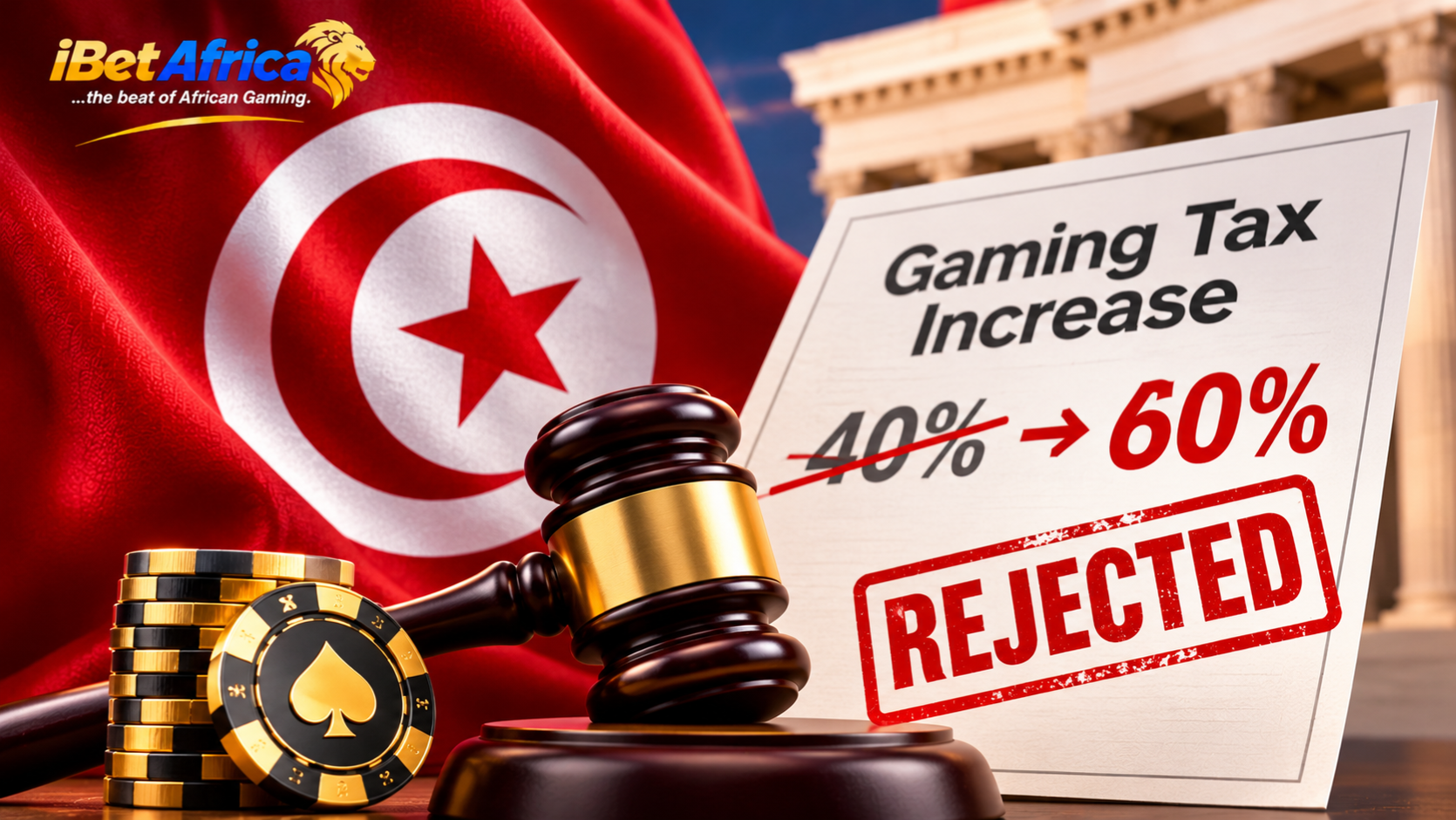
Tunisia’s parliamentary finance committees have rejected a proposal to increase taxation on certain games and competitions from 40% to 60%, marking a significant development in the country’s ongoing debate over gaming taxation and public revenue.
The decision, taken on 16 November 2026, concerns Article 24 of Tunisia’s draft Finance Bill for 2027, which proposed several additional tax measures intended to strengthen funding for the country’s social security system.
The rejection by the parliamentary committees represents a setback for the proposed increase, although the wider Finance Bill remains subject to further legislative consideration.
For Africa’s gaming industry, the development highlights the relationship between taxation, public finance and the regulatory environment surrounding gaming-related activities.
Tunisia’s Proposed Gaming Tax Increase
Under Article 24 of the draft Finance Bill, Tunisia proposed increasing the tax applicable to certain games and competitions from 40% to 60%.
The proposed adjustment represented a 20-percentage-point increase in the existing rate.
The measure covered specified games and competitions conducted through communication and information technologies, according to reporting on the draft legislation.
It formed part of a wider package of fiscal proposals aimed at generating additional resources for Tunisia’s social security financing arrangements.
Other measures under the same article included higher consumption duties on alcoholic beverages and an increase in the tax on travel abroad.
The government intended to direct the additional revenue towards a dedicated mechanism for diversifying social security funding.
However, lawmakers raised concerns about the proposed approach.
Parliamentary Committees Reject Article 24
On 16 November, the finance and budget committees of Tunisia’s two legislative chambers rejected Article 24 during their examination of the 2027 Finance Bill.
The committees involved were those of the Assembly of the People’s Representatives and the National Council of Regions and Districts.
The decision was subsequently confirmed in reporting by Tunisia’s national news agency, TAP, and several local media organisations.
Maher Kettari, chairman of the finance committee of the Assembly of the People’s Representatives, questioned the effectiveness of relying on additional taxation to address structural financing challenges.
According to local reporting, Kettari argued that sustainable improvements in social security financing would require broader reforms rather than additional revenue measures alone.
The rejection covered the article containing the proposed gaming tax increase alongside other fiscal adjustments.
It did not amount to a rejection of the entire Finance Bill.
Why the Decision Matters for Gaming Taxation
Taxation remains an important consideration for businesses operating within regulated gaming and betting environments.
Changes in tax rates can influence the commercial conditions under which gaming-related products and services are offered.
For operators and investors, legislative developments can also affect financial planning, regulatory compliance and assessments of future market opportunities.
In Tunisia’s case, the proposed increase from 40% to 60% would have represented a substantial adjustment to the tax treatment of the activities covered by the provision.
However, the available legislative reporting does not establish that the measure would have applied uniformly to every category of sports betting, casino gaming or licensed gambling operation.
It is therefore important to distinguish the specific tax on games and competitions from the broader range of gaming taxes that may exist under Tunisian law.
The parliamentary committees’ decision provides a significant development for businesses and stakeholders monitoring the country’s fiscal policy.
Balancing Public Revenue and Economic Considerations
Tunisia’s proposal reflects a wider policy challenge faced by governments seeking to increase public revenue while managing the potential economic effects of higher taxation.
The rejected article was intended to contribute additional funding to social security arrangements.
According to local reporting, lawmakers questioned whether the proposed measures would provide a sustainable solution to existing financing pressures.
The debate therefore extended beyond gaming taxation to the broader effectiveness of the country’s fiscal and social security policies.
For gaming-related businesses, the discussion reinforces the importance of monitoring both sector-specific regulation and wider government revenue policies.
Tax proposals introduced as part of national budget legislation can have implications for commercial activities even when they are not presented primarily as gaming reforms.
What Happens Next?
The rejection of Article 24 occurred during the parliamentary committee review process.
Tunisia’s draft Finance Bill for 2027 is continuing through the legislative process, meaning its final provisions may still be subject to further debate, amendments and parliamentary decisions.
The committee decision does not automatically guarantee that similar tax proposals cannot be introduced again.
Stakeholders will therefore need to monitor the final approved legislation to determine whether the proposed increase remains excluded.
Until the legislative process is completed, it would be premature to describe the committee decision as a permanent settlement of Tunisia’s gaming taxation policy.
Implications for Africa’s Gaming Industry
Tunisia’s decision adds to the wider conversation about the role of taxation in Africa’s evolving gaming regulatory environment.
Across the continent, governments continue to assess how gaming-related activities should contribute to public revenue while maintaining effective regulatory oversight.
The Tunisian development demonstrates how parliamentary scrutiny can alter proposed fiscal measures before they become law.
For operators, technology suppliers and investors monitoring North African markets, the outcome of the 2027 Finance Bill will remain an important policy development.
For now, the confirmed position is that Tunisia’s parliamentary finance committees have rejected the proposed increase in the tax on certain games and competitions from 40% to 60%, with the wider legislative process still ongoing.