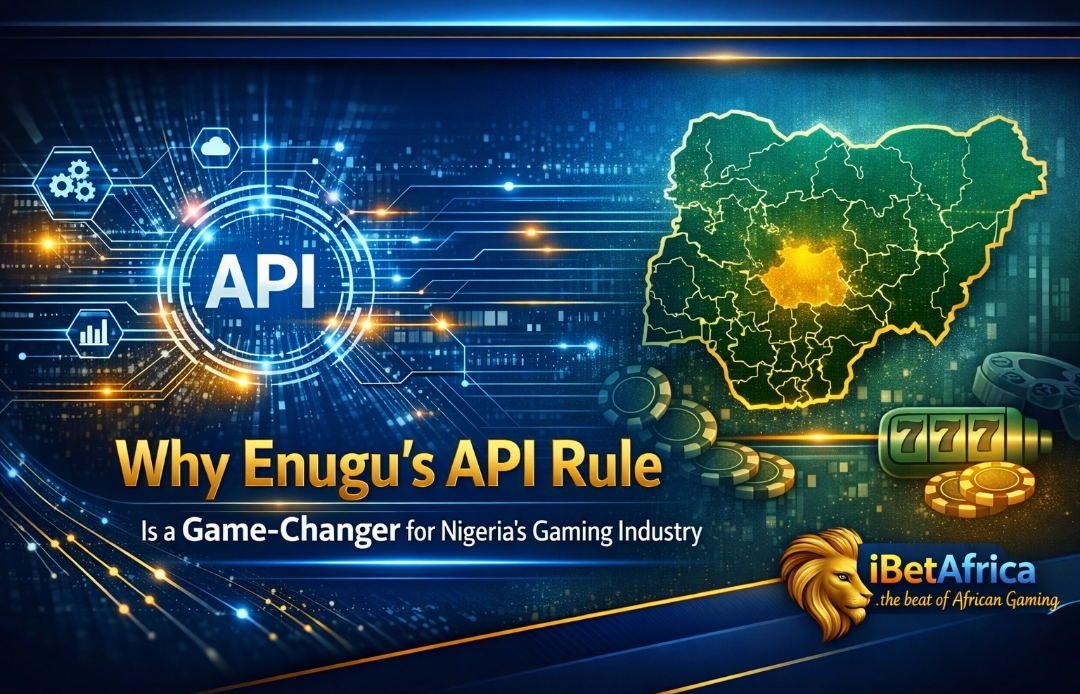
 As Nigeria’s gaming ecosystem reawakens from the festive break, one regulatory development stands out as both timely and transformative: the Enugu State Gaming and Lottery Commission Law, 2025.
At its core, the law’s requirement for mandatory API integration between licensed operators and the state regulator marks a decisive shift toward transparency, accountability, and trust—three pillars that are essential for the long-term sustainability of any regulated gaming market.
While some operators have raised concerns about the technical and financial implications of building and maintaining real-time system integrations, particularly smaller operators awaiting detailed technical specifications, this perspective risks missing the broader opportunity. When viewed holistically, Enugu’s approach elevates not just regulatory oversight, but the entire gaming ecosystem.
From Fragmented Oversight to Real-Time Visibility
By requiring operators to connect directly to the regulator’s systems, the Enugu Gaming and Lottery Commission is addressing one of the industry’s most persistent challenges: the “black box” problem.
In many jurisdictions, Gross Gaming Revenue (GGR) calculations rely heavily on self-reported figures—an approach that naturally opens the door to disputes, inconsistencies, and manipulation. Real-time API integration eliminates this friction by providing regulators with accurate, live data directly from operators’ platforms.
The result is a regulatory framework that is less adversarial, more precise, and far more reliable. Compliance becomes measurable, auditable, and defensible—benefiting both regulators and operators.
A Clear Line Between Compliant and Non-Compliant Operators
In an era where fake licences, offshore fronts, and unregulated platforms continue to undermine public trust in gaming, Enugu’s model introduces a powerful differentiator.
Operators that integrate successfully can prove their legitimacy instantly. Regulators, in turn, gain the ability to clearly distinguish lawful operators from illegal or rogue entities. This level of visibility strengthens enforcement while protecting compliant businesses from being unfairly grouped with bad actors.
Importantly, this approach reflects a modern regulatory philosophy: you cannot effectively regulate what you cannot see.
Predictability, Fairness, and Reduced Regulatory Friction
One of the most understated benefits of a shared regulatory API standard is predictability. Operators across Nigeria have long expressed frustration with shifting compliance expectations and opaque oversight mechanisms.
A central, clearly defined integration framework changes that dynamic. Once an operator meets the technical and operational requirements, their compliance position becomes clear and defensible. Audit cycles shorten, retroactive disputes diminish, and regulatory engagement becomes more collaborative than confrontational.
In effect, good actors are rewarded with stability, while non-compliance is exposed quickly and transparently.
Technology as a Tool for Player Protection
Beyond revenue assurance and enforcement, Enugu’s API-driven oversight aligns with a broader vision of industry sanitisation and player protection.
By embedding supervision into technology, regulators can more effectively identify illegal operations, track suspicious activity, and shut down unlicensed outlets. This mirrors global best practices, where digital monitoring, geo-location controls, and automated reporting are increasingly used not as punitive tools, but as safeguards for the public good.
Building Investor Confidence and Regulatory Leadership
The implications extend beyond Enugu State. As Nigeria moves toward greater inter-state regulatory cooperation—particularly through frameworks like the Universal Reciprocity Certificate promoted by the Federation of State Gaming Regulators of Nigeria—real-time data integration positions Enugu as a regulatory leader others can emulate.
Operators that adapt early will find themselves better prepared for future licensing reciprocity, multi-state expansion, and investor due diligence. For investors, the presence of transparent, technology-driven regulation reduces risk and enhances confidence in the Nigerian gaming market.
Regulation and Innovation Are Not Opposites
Ultimately, Enugu’s API integration rule reinforces a fundamental truth: technology is not the enemy of regulation—it is its backbone.
Requiring automated, transparent data flows is not an intrusion into business autonomy. It is a recognition that modern gaming ecosystems demand modern regulatory tools. Operators willing to embrace this model will not only earn the trust of regulators and players but will also help build a more mature, standardised, and investment-ready industry.
As the year begins and the industry regains momentum, the Enugu State Gaming and Lottery Commission Law, 2025 serves as a powerful reminder that regulation and innovation can—and should—work hand in hand to create a safer, smarter, and more sustainable gaming industry for Nigeria.
Editorial Note:
This analysis is adapted from an original article by Ejiofor Agada, first published on TechEconomy.ng. Rewritten and contextualised for iBetAfrica.